PVweekly.com · Weekly paper
October 16–22, 2026
NASA clarifies NIAC Step A requirements ahead of October 28 deadline
U.S. organizations can seek up to $225,000 for nine-month aerospace concept studies. Awards depend on appropriations.


Photo details
Contextual file photo of the agency’s headquarters; it does not depict the NIAC amendment, a proposed project or an award recipient. The source summary dates it between 1992 and May 7, 1997, while an older upload entry lists March 15, 2008; the exact date remains unresolved. The complete item-specific rights text credits NASA and establishes public-domain status in the United States. Restrictions on NASA logos, insignia and emblems remain applicable. Source: the linked source record Resized for publication; no scene content was added or removed.NASA’s October 15 amendment to its 2027 Innovative Advanced Concepts (NIAC) Phase I call asks Step A applicants to include a high-level list of Phase I study objectives. Submissions for solicitation NNH26ZTR001N-27NIAC_A1 are due October 28, 2026, at 5 p.m. Eastern Daylight Time.
The call seeks early studies of unexplored, technically credible aerospace concepts tied to a specific mission that would use them. All categories of U.S. organizations may apply, subject to the notice’s full eligibility terms. Only invited applicants may submit the expanded Step B proposal.
NASA sets a ceiling of $225,000 per award for a nine-month study. In the amended notice checked October 18, 2026, NASA lists no available appropriated funding for this call; awards depend on appropriations and are not guaranteed.
Step A requires a cover page generated by NASA’s NSPIRES proposal system, a one-page landscape overview chart using the current template, and a technical and management section limited to three pages. References are optional. A detailed work plan and discussion of the budget and team are neither required nor requested at Step A; that material belongs in Step B.
Review the governing documents on the solicitation’s NSPIRES page, including the amended appendix and Amendment 1, and obtain the current overview chart template there. Coordinate with your organization’s authorized organizational representative (AOR), who completes submission. NIAC accepts proposals only through NSPIRES. Verify successful submission through the confirmation email to the AOR and principal investigator or by checking that the proposal appears under Submitted Proposals in the system.
Sources
Reported from public primary documents with AI assistance, independent source retrieval, and separate editorial reviews. No interviews, site visits or equipment tests were performed. Issuer statements retain attribution; announced plans are not completed results.
- S2: nspires.nasaprs.com — accessed 2026-10-18
- S3: nspires.nasaprs.com — accessed 2026-10-18
- S1: nspires.nasaprs.com — accessed 2026-10-18
NASA reports Roman’s main instrument checkout complete
NASA reported optical error below the required limit and outlined further coronagraph calibration before a planned light-blocking demonstration.
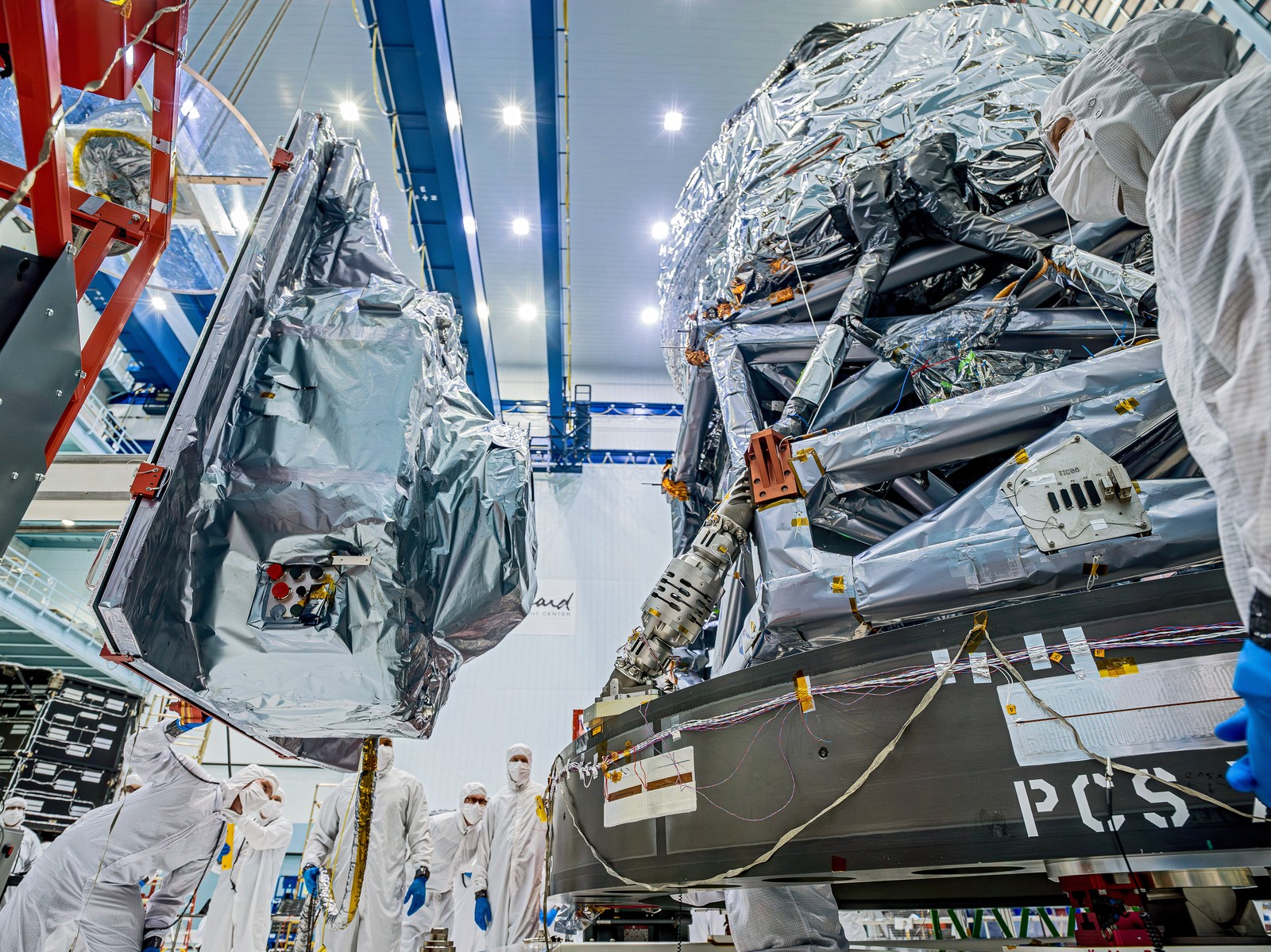
Photo details
NASA published this installation photograph on December 12, 2024. It shows ground integration of the Roman payload, not the current in-space checkout. The item credits NASA/Chris Gunn. NASA permits factual news use with acknowledgement and without implied endorsement; its media guidelines retain restrictions on logos and third-party material. Resized for publication.NASA reported on October 14, 2026, that engineers had completed checkout of the Nancy Grace Roman Space Telescope’s main instrument and adjusted the observatory’s optics to sharpen its focus.
The Wide Field Instrument will support Roman’s planned surveys, including studies of dark matter and dark energy, NASA said. Engineers checked its 18 detectors and their electronics, a wheel carrying filters, calibration lights, the alignment mechanism and temperature controls. The calibration lights let engineers measure the detectors’ response to different light levels.
After adjustment, NASA reported an optical error of 63 nanometers RMS for the Wide Field Instrument, below the requirement of about 90 nanometers. RMS stands for root mean square; the measurement describes how far the optics deviate from ideal performance.
Roman remains in commissioning, which NASA describes as turning on, adjusting and calibrating systems to prepare for science operations. The agency planned further calibration of the coronagraph’s camera settings and deformable mirrors, which can change shape, before attempting a light-blocking demonstration in the weeks following October 14. The NASA records checked on October 19 do not establish a successful light-blocking demonstration or the start of routine surveys.
Sources
Reported from public primary documents with AI assistance, independent source retrieval, and separate editorial reviews. No interviews, site visits or equipment tests were performed. Issuer statements retain attribution; announced plans are not completed results.
- S1: science.nasa.gov — accessed 2026-10-19
- S2: science.nasa.gov — accessed 2026-10-19
HII announces $56 million Navy award for AUKUS engineering
The contract includes submarine design and industrial support. Its $91 million potential value depends on an option being exercised.
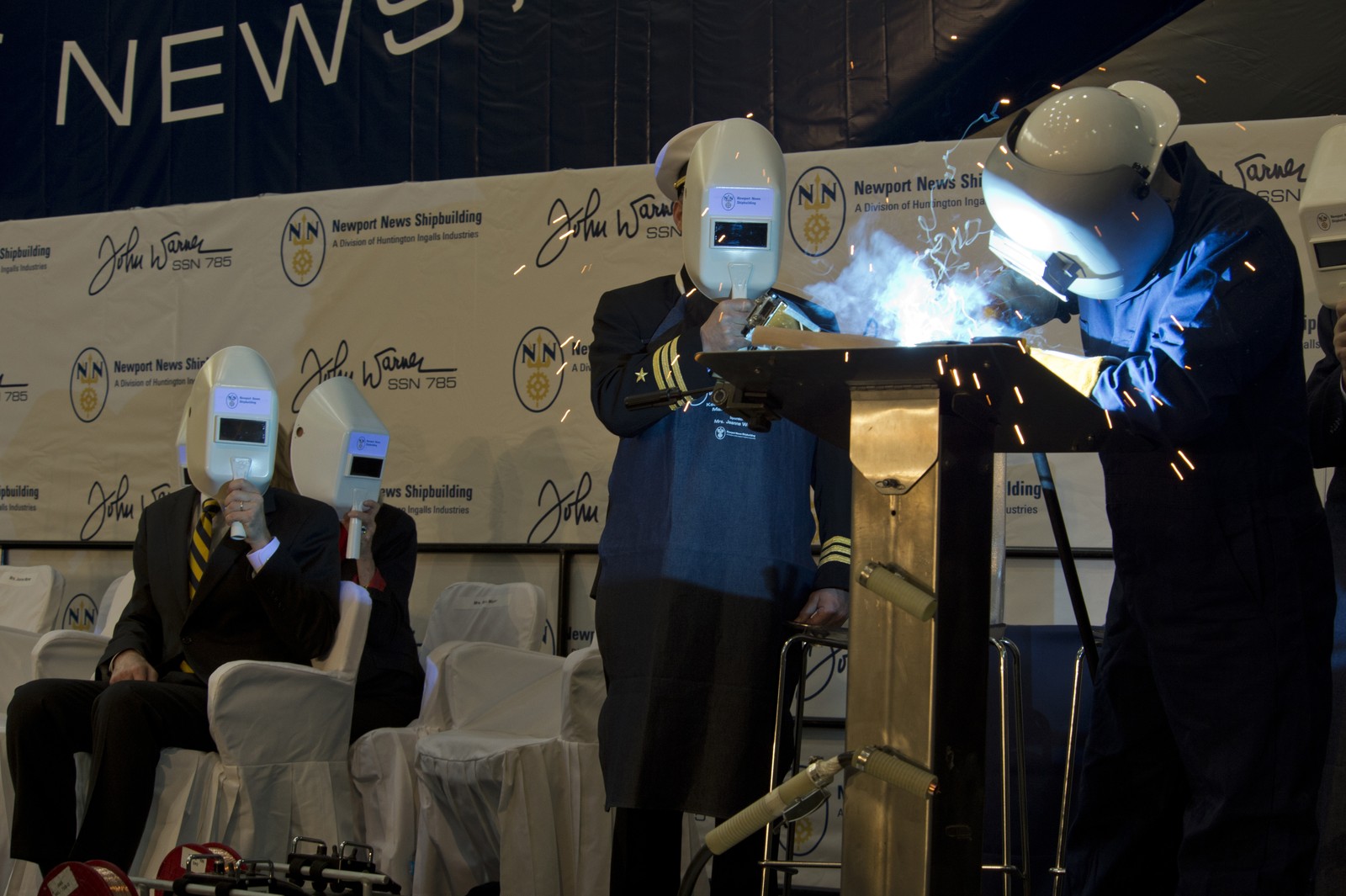

Photo details
Historical ceremony for PCU John Warner (SSN 785); this photograph does not depict the announced award or SSN-AUKUS work. The source caption and camera metadata specify March 16, 2013, while the listing’s date field says March 18. Credit: U.S. Navy photo by Mass Communication Specialist Seaman Scott Barnes, via Official U.S. Navy Page/Wikimedia Commons. The complete item-specific rights text establishes public-domain status in the United States as an official Navy work, with Public Domain Mark 1.0: Public domain. Resized for publication; no scene content was added or removed.HII said in an October 13, 2026, announcement that its Newport News Shipbuilding division received a $56 million U.S. Navy contract for shipbuilding engineering and design work. The award supports AUKUS, the partnership among Australia, the United Kingdom and the United States.
An option, if exercised, would bring the contract’s cumulative value to $91 million, the company said. HII’s October 13, 2026 announcement does not establish that the option was exercised or that $91 million was obligated.
HII said the contract would continue Newport News’ support for the United Kingdom and Australia under Foreign Military Sales requirements. The work includes introducing technology, engineering, supply chain and workforce development support, and digital transformation.
The award also covers the United States Industry Support effort, HII said. Under that effort, Newport News engineers and designers would contribute to the design of SSN-AUKUS, the nuclear-powered submarine that the United Kingdom and Australia would build.
Sources
Reported from public primary documents with AI assistance, independent source retrieval, and separate editorial reviews. No interviews, site visits or equipment tests were performed. Issuer statements retain attribution; announced plans are not completed results.
- S1: www.hii.com — accessed 2026-10-19
HII sets October hiring events in Pascagoula and North Charleston
Ingalls welcomes skilled, semi-skilled and entry-level applicants on October 24. Charleston Operations holds its skilled trades event October 27.


Photo details
Historical shipbuilding context; this photograph does not depict either announced hiring event or Charleston Operations. Source: U.S. Navy All Hands magazine, March 1975 cover. The archived item identifies an official military photograph, public domain in the United States.HII announced two shipbuilding hiring events in its October 16, 2026, notices: October 24 in Pascagoula, Mississippi, and October 27 in North Charleston, South Carolina. The attendance instructions differ: Ingalls recommends preregistration, while Charleston Operations does not require it.
Pascagoula, Mississippi — October 24
Ingalls Shipbuilding will host its event on Saturday, October 24, at the Ingalls Maritime Training Academy, 2721 Jerry St. Pé Highway, Pascagoula. The announced hours at the local venue are 8 a.m. to noon. The event is open to skilled, semi-skilled and entry-level applicants.
Attendees should bring two valid forms of identification. To preregister, follow the registration link provided in HII’s official notice for the Ingalls Shipbuilding hiring event, listed under Sources.
North Charleston, South Carolina — October 27
Newport News Shipbuilding Charleston Operations will hold its skilled trades event Tuesday, October 27, at SC Works, 1930 Hanahan Road, Suite 200, North Charleston. The announced hours at this local venue are 10 a.m. to 6 p.m.
No preregistration is required for the North Charleston event. HII encourages candidates to bring a resume and any relevant certifications; qualified applicants may participate in onsite interviews. For additional event information and access to HII’s careers site, follow the links in the official Charleston Operations hiring notice, listed under Sources.
Sources
Reported from public primary documents with AI assistance, independent source retrieval, and separate editorial reviews. No interviews, site visits or equipment tests were performed. Issuer statements retain attribution; announced plans are not completed results.
- S1: Ingalls hiring notice — www.hii.com — accessed 2026-10-19
- S2: Charleston Operations hiring notice — www.hii.com — accessed 2026-10-19
One light ruler on a chip performs three measurement tasks
Researchers simplified calibration for a versatile microcomb, a potential component of portable optical clocks. The experiment still required external readout hardware.
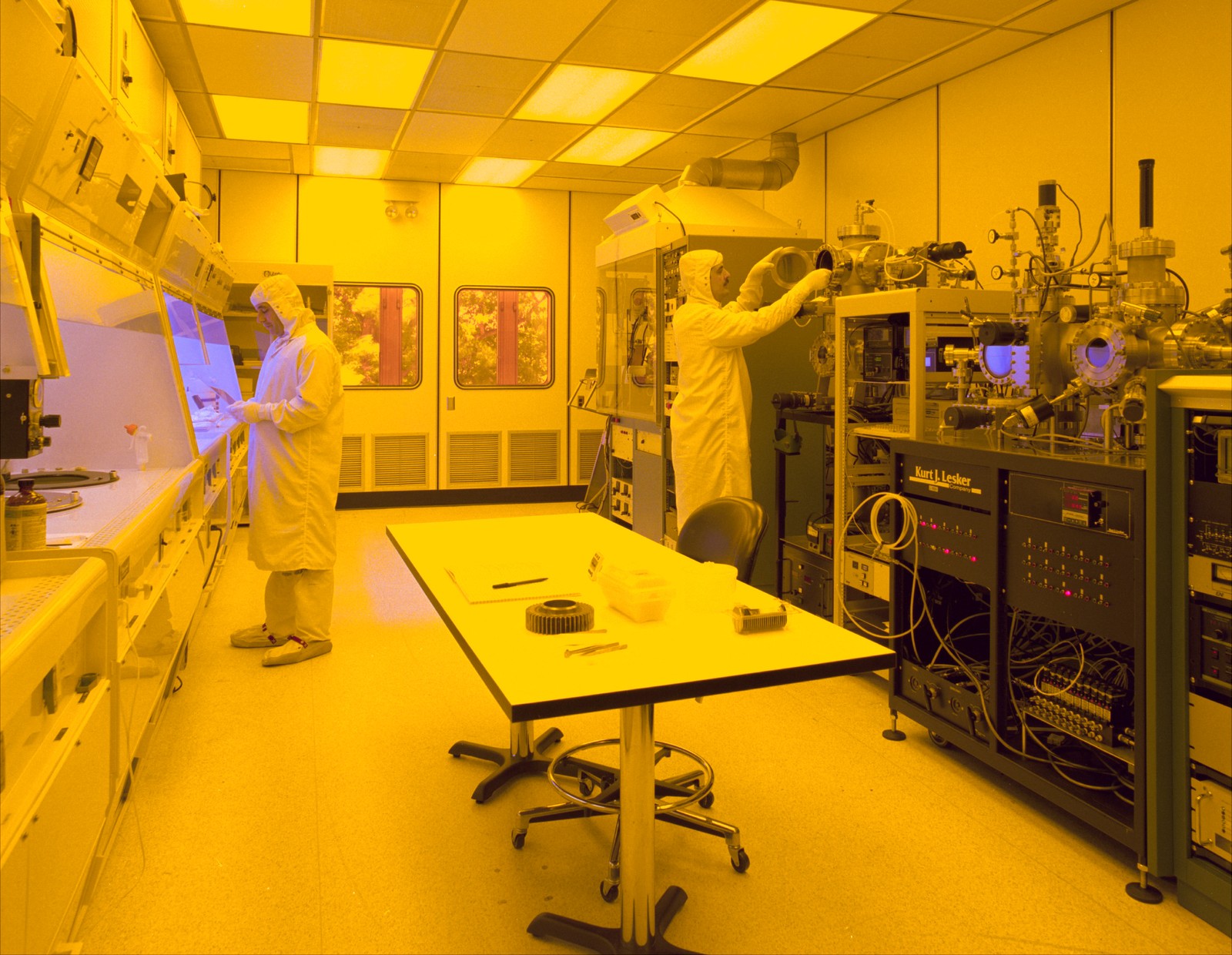

Photo details
Contextual chip-fabrication photograph; it does not depict the reported microcomb, experiment or research team. NASA Glenn Research Center image GRC-1998-C-01261. Commons lists May 1, 2004; the supplied evidence does not independently confirm the capture date or identify the facility location. Credit: NASA; Commons upload by Duk, with color-balance edits recorded by Jacek Halicki. The archived item-specific statement establishes public-domain status in the United States. Source: the linked source record Resized for publication; no scene content was added or removed.Researchers at the National Institute of Standards and Technology (NIST) and their collaborators used the same miniature light ruler to generate calibrated optical frequencies, produce low-noise millimeter waves and read an optical clock reference. Their Nature paper, published September 30, 2026, reports a calibration advance that helped make this versatility possible: the same microcomb handled all three jobs by changing how its two input lasers were controlled.
NIST's October 16 announcement identified mobile timekeeping and navigation during GPS outages or jamming as potential applications. It followed the Joint Quantum Institute's October 5 explanation of the same collaboration's work. The demonstrated advance concerns the measurement machinery needed for such systems. Although the new approach simplifies calibration, the experiment retained external lasers, feedback controls and equipment for reading the chip's fast signals.
An optical clock ties laser light to the behavior of atoms. The light oscillates too rapidly for electronics to count directly. A frequency comb supplies a series of precisely spaced optical frequencies, called teeth, that connects those rapid oscillations to slower microwave signals. This connection allows the stability of an optical reference to reach the electronic systems that track time.
Even spacing alone does not make the comb an absolute frequency ruler. Researchers must also know how far its grid is shifted from zero frequency. Without that offset, knowing the intervals between teeth does not establish the exact frequency of each tooth. Both the spacing and the offset must be known and controlled.
That calibration has been a difficult step for miniature combs. Conventional designs use one driving laser, or pump, and generate additional frequencies outward from it. Teeth toward the edges become weaker and noisier. The standard offset measurement requires usable signals separated by approximately an octave, meaning one frequency is roughly twice the other. When those widely separated signals are too weak or unstable, researchers need additional equipment, complicating efforts to shrink the system.
The reported advance forms a comb between two pump lasers separated by roughly an octave. Their light circulates through a tiny ring made of silicon nitride, interacting through the material to generate additional frequencies. Those interactions also align otherwise offset groups of teeth into one frequency grid that includes both pumps. This self-alignment makes the strong input laser signals part of the calibrated ruler.
Because the pumps belong to that grid, their relationship determines the comb's zero-frequency offset. Researchers can measure it on the input side of the chip by doubling one pump's frequency and comparing it with the other. Feedback stabilizes the relationship. The approach moves the calibration measurement to strong input signals, avoiding dependence on faint edge teeth, while retaining frequency-doubling optics and electronic controls.
In the first measurement task, the team used a microwave frequency standard to set the comb's tooth spacing and offset. They then checked selected optical teeth with a conventional fiber comb. The measurements agreed with frequencies expected from those settings. This is optical-frequency synthesis: establishing known frequencies of light from an electronic reference.
The second task reversed the direction. A low-noise laser reference supplied optical light, and the microcomb transferred its stability into lower-frequency millimeter-wave signals. Dividing optical frequencies down reduces the fluctuations carried into that output. This tested the comb's ability to produce low-noise signals from an optical reference using the same device that had performed frequency synthesis.
For optical-clock readout, the team used a laser tied to a rubidium atomic reference. The comb transferred that reference's long-term stability to its pulse repetition rate—the rate at which pulses recur. Measuring that rate allowed the apparatus to determine the optical reference's frequency. The atoms supplied the timing standard; the comb provided the connection to electronics.
The clock-frequency estimates from the microcomb and the team's conventional fiber comb differed by about 3 kilohertz. That was within the microcomb measurement's reported standard deviation of approximately 26 kilohertz over 75 minutes. The standard deviation describes the spread in the readings, giving context for judging the difference between the instruments.
Both readouts were offset from the published value for the atomic reference. The authors attributed that shared shift to systematic effects in the rubidium apparatus. Agreement between the instruments supports the microcomb's readout function without establishing equivalent absolute accuracy. This was the collaboration's own comparison, not independent replication of its results.
The fabrication results offer another bounded measure of progress. All 10 devices sampled across a 100-millimeter wafer produced self-aligned combs, despite deliberately different coupler designs—the structures that transfer light into and out of the rings. The paper identifies Ligentec as the commercial silicon nitride foundry. These results demonstrate tolerance across the tested devices; they do not establish the proportion of working devices across an entire production run.
A remaining hardware requirement lies in reading the comb's output. Its high repetition rate required a phase-modulator apparatus for downconversion: bringing a fast signal into a lower frequency range that the measurement electronics could handle. Simplifying the offset measurement did not remove that apparatus. The demonstrated system therefore combined a miniature comb with external equipment needed to extract a useful electronic signal.
The paper and institutional updates through October 16, 2026 do not report a complete field-ready optical clock or a deployed GPS replacement. To advance toward portable operation, the authors propose further integration, including compact comb or electro-optic technology for another stage of frequency division. That proposed stage would address a concrete remaining requirement: making the chip's fast output readable with a more compact system.
Sources
Reported from public primary documents with AI assistance, independent source retrieval, and separate editorial reviews. No interviews, site visits or equipment tests were performed. Issuer statements retain attribution; announced plans are not completed results.
- S1: www.nist.gov — accessed 2026-10-19
- S3: hub.jqi.umd.edu — accessed 2026-10-19
- S2: jqi.umd.edu — accessed 2026-10-19
- S4: www.nist.gov — accessed 2026-10-19
FAA finalizes stabilizer inspection rule for specified Boeing 737s
AD 2026-20-14 takes legal effect November 23, 2026, and addresses a condition the FAA says could lead to loss of control.


Photo details
Contextual file photo of aircraft N957WN; the supplied evidence does not establish this airframe's inclusion in the directive or show an inspection. Credit: Sixflashphoto, own work, via Wikimedia Commons. License: CC BY-SA 4.0. Reuse requires attribution, a license link and identification of changes; adaptations must carry the same or a compatible license. Source: the linked source record Resized for publication; no scene content was added or removed.The Federal Aviation Administration has finalized AD 2026-20-14, a new directive requiring horizontal-stabilizer checks on specified Boeing 737 airplanes. Filed October 16 for publication in the October 19, 2026, Federal Register, the directive will take legal effect November 23.
Coverage is limited to Boeing 737-600, -700, -700C, -800, -900 and -900ER airplanes identified in the Boeing bulletin incorporated into the rule.
The FAA says multiple operators reported repeated nose-up and nose-down motion caused by excessive horizontal-stabilizer freeplay, or looseness. The agency warns that this condition could cause flutter, a vibration that can lead to loss of control.
The rule requires measuring freeplay at the stabilizer’s pivot hinges and jackscrew, along with applicable repeat checks and repair or replacement of worn parts.
The incorporated Boeing bulletin was not retrieved for this report, so configuration-specific inspection deadlines and prior-work credits have not been verified. Operators should consult the official final rule to review applicability and locate the incorporated compliance instructions.
Sources
Reported from public primary documents with AI assistance, independent source retrieval, and separate editorial reviews. No interviews, site visits or equipment tests were performed. Issuer statements retain attribution; announced plans are not completed results.
- S1: www.govinfo.gov — accessed 2026-10-18