Photo details
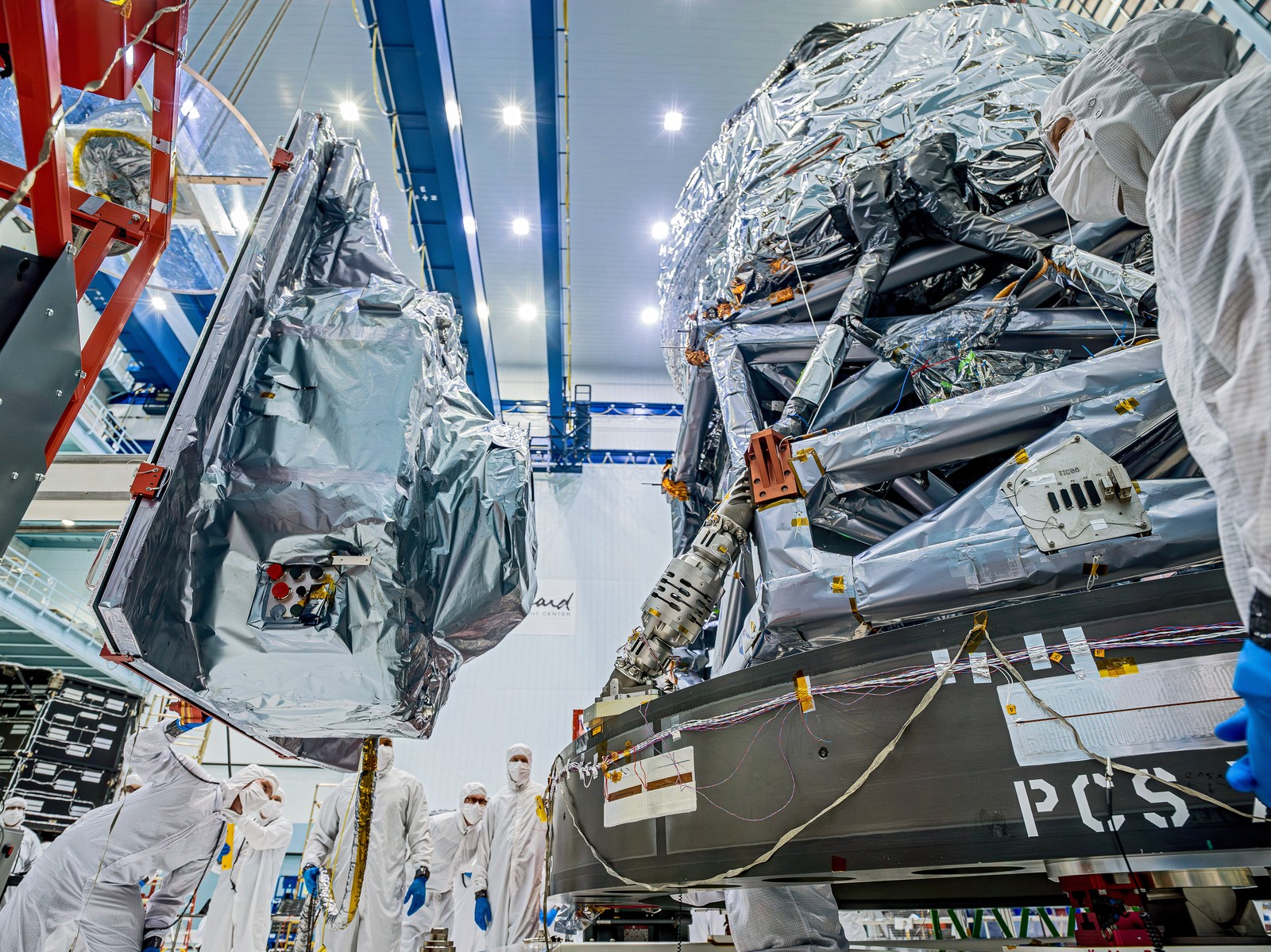
NASA published this installation photograph on December 12, 2024. It shows ground integration of the Roman payload, not the current in-space checkout. The item credits NASA/Chris Gunn. NASA permits factual news use with acknowledgement and without implied endorsement; its media guidelines retain restrictions on logos and third-party material. Resized for publication.NASA reported on October 14, 2026, that engineers had completed checkout of the Nancy Grace Roman Space Telescope’s main instrument and adjusted the observatory’s optics to sharpen its focus.
The Wide Field Instrument will support Roman’s planned surveys, including studies of dark matter and dark energy, NASA said. Engineers checked its 18 detectors and their electronics, a wheel carrying filters, calibration lights, the alignment mechanism and temperature controls. The calibration lights let engineers measure the detectors’ response to different light levels.
After adjustment, NASA reported an optical error of 63 nanometers RMS for the Wide Field Instrument, below the requirement of about 90 nanometers. RMS stands for root mean square; the measurement describes how far the optics deviate from ideal performance.
Roman remains in commissioning, which NASA describes as turning on, adjusting and calibrating systems to prepare for science operations. The agency planned further calibration of the coronagraph’s camera settings and deformable mirrors, which can change shape, before attempting a light-blocking demonstration in the weeks following October 14. The NASA records checked on October 19 do not establish a successful light-blocking demonstration or the start of routine surveys.
Sources
Reported from public primary documents with AI assistance, independent source retrieval, and separate editorial reviews. No interviews, site visits or equipment tests were performed. Issuer statements retain attribution; announced plans are not completed results.
- S1: science.nasa.gov — accessed 2026-10-19
- S2: science.nasa.gov — accessed 2026-10-19