Nuclear technology can supply valuable materials as well as electricity. Oklo’s planned Groves-2 Forge facility would bring several steps of isotope manufacturing together, adding processing capabilities to the reactor work on which the project is based. [S1]
Connecting the production line
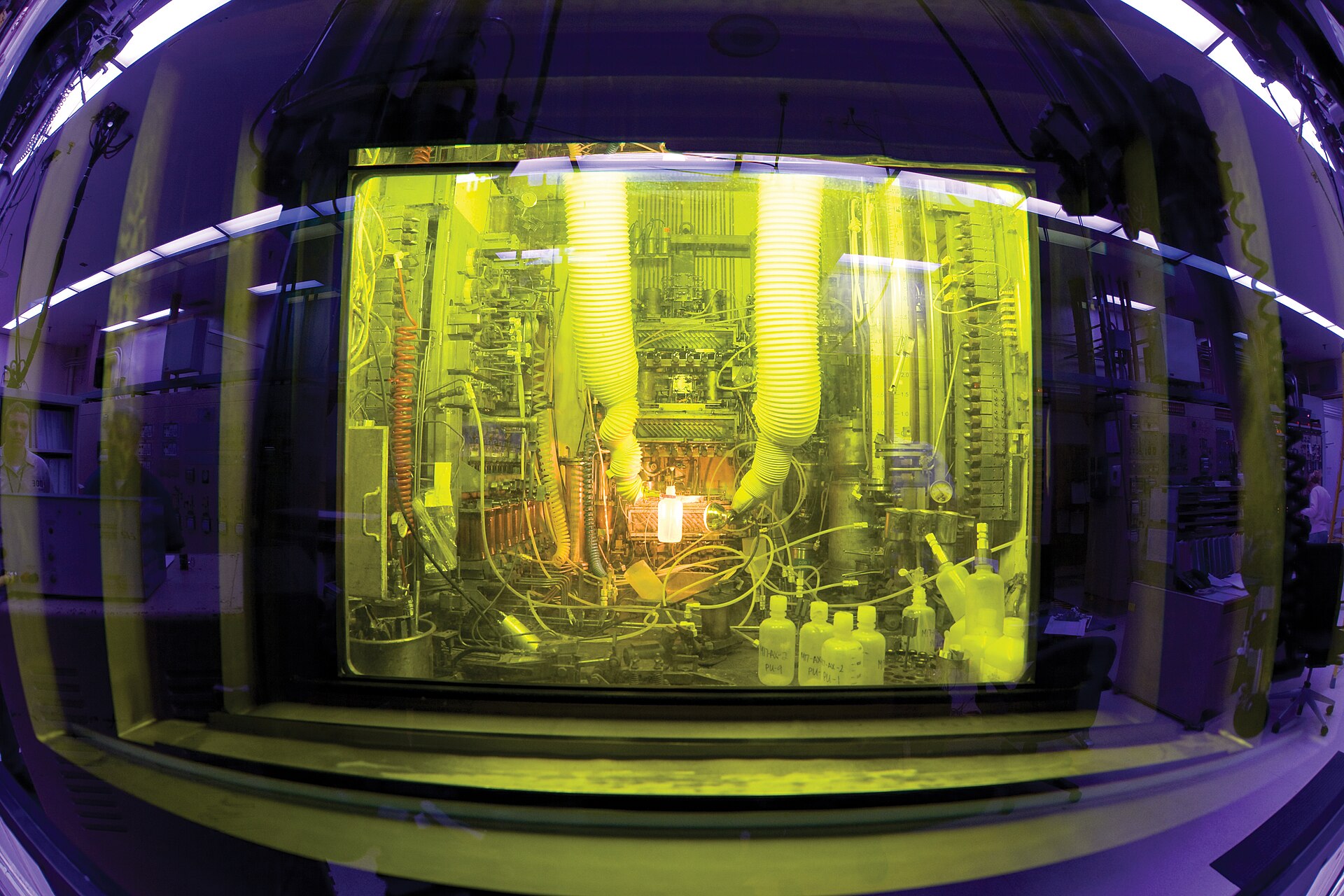

Photo details
File photo: a hot cell at Oak Ridge National Laboratory’s Radiochemical Engineering Development Center, April 25, 2007. This is existing isotope infrastructure, not Oklo’s planned Groves-2 Forge. Publisher-supplied resized image; no local content edits. Credit: Oak Ridge National Laboratory / Larry Hamill.In its October 13 announcement, Oklo said the pilot would combine irradiation in a reactor with shielded processing, isotope separation, recovery, packaging and transportation. Its initial focus is lutetium-177, which is used in targeted cancer treatments. The company says the project will draw on experience from its Groves Isotope Test Reactor in Texas. [S1]
The industrial idea is to connect making the material with preparing it for customers. A reactor is one part of that chain. Processing and delivery also have to work if a promising nuclear project is to become a dependable source of supply. [S1]
A product with a clock
Lutetium-177 has a half-life of 6.647 days, according to the Department of Energy’s isotope product sheet. In plain terms, its radioactive activity falls by half over roughly a week. That makes elapsed time a practical part of its supply chain: material changes while it is being processed and moved. [S2]
The same catalog lists lutetium-177 as routinely available through the federal isotope program. Groves-2 Forge would enter a field with existing supply. Its importance will depend on what additional production and processing capacity it can actually deliver. [S1] [S2]
From pilot to production
Oklo connects the project to the Department of Energy’s Nuclear Energy Launch Pad initiative. The August 24 selection announcement from Idaho National Laboratory named Oklo among 12 developers with 13 projects. That earlier announcement offered technical, regulatory and deployment support; the October company release describes Groves-2 Forge’s proposed role. [S3]
Oklo says commercial-scale operation would require the appropriate Nuclear Regulatory Commission licenses. The project is a plan for a pilot, and the company has not supplied a production start date or output target in this announcement. Those details, followed by operating results, will help show how the proposal translates into American manufacturing capacity. [S1]
The source record
- S1: Oklo Inc. — checked
- S2: DOE National Isotope Development Center — checked
- S3: Idaho National Laboratory — checked
Reported from the linked primary documents with AI assistance and separate editorial reviews. No interviews, site visits or independent equipment tests were performed. Company statements are attributed; announced plans and research objectives are not completed results.