America’s next chapter on the Moon is taking shape in earthly places: a factory, a test chamber and a launch site. Voyager Technologies’ Griffin-1 lander has finished a demanding series of environmental tests at NASA’s Jet Propulsion Laboratory in Southern California, the laboratory reported on October 13. [S1]
Proving the hardware
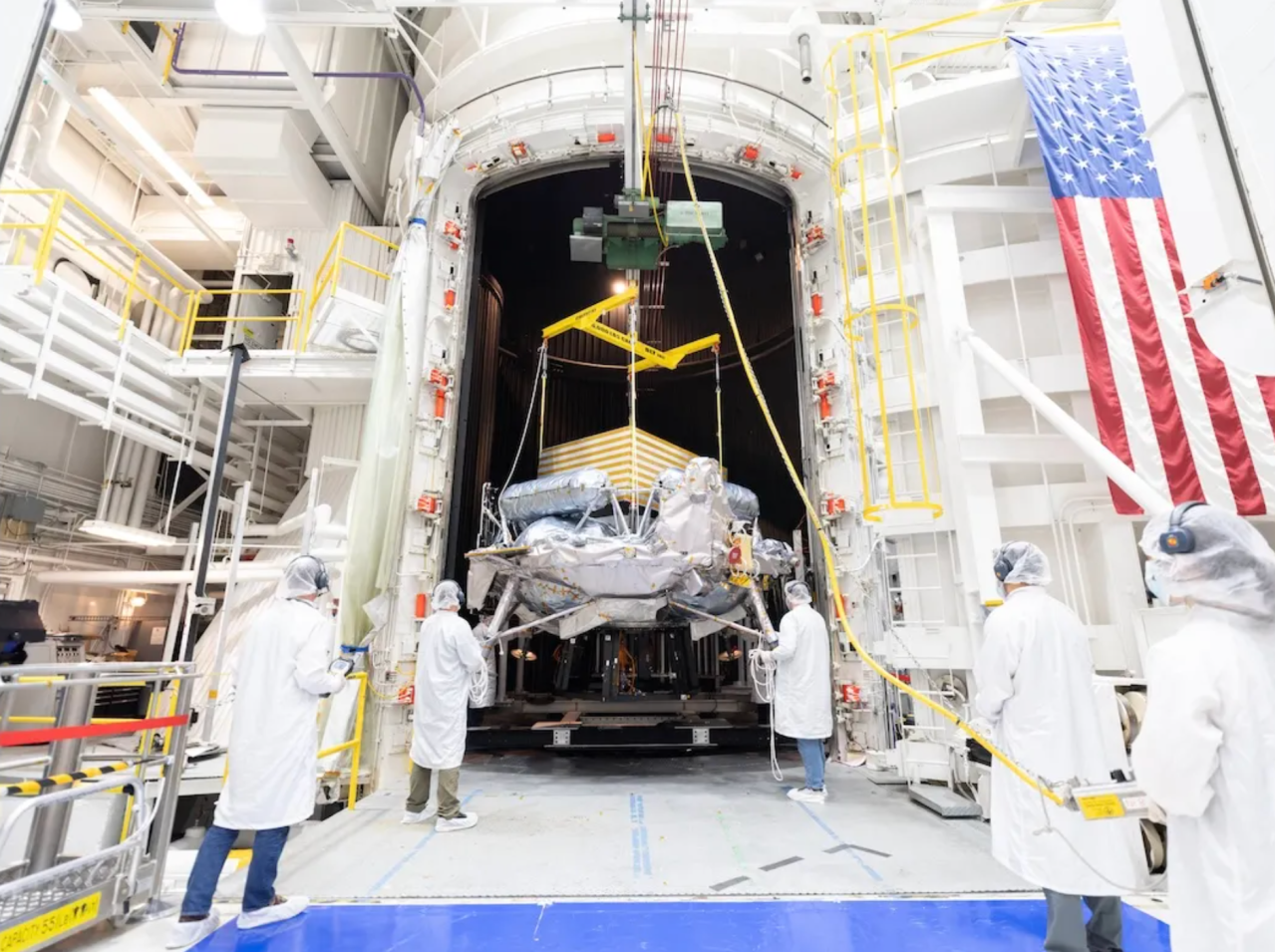
Photo details
Griffin-1 is positioned inside JPL’s 25-Foot Space Simulator on August 31, 2026. Photograph from the environmental test campaign. Editorial use with credit; no NASA, JPL or Caltech endorsement is implied. Publisher-cropped image; no local content edits. Credit: Courtesy NASA/JPL-Caltech.The campaign checked how the spacecraft withstands vibration, launch noise, electrical interference and temperature extremes in a vacuum. During thermal testing, temperatures ranged from −100°C to 75°C. Griffin-1 has returned to the company’s Pittsburgh facility for final assembly, with launch preparations and shipment to Cape Canaveral still ahead. JPL’s testing report describes the work. [S1]
JPL says the lander is expected to launch later in 2026 on a SpaceX Falcon Heavy, bound for Nobile Crater near the lunar South Pole. That is a mission plan, with launch and landing still to come. The completed tests mark progress toward it. [S1]
NASA is buying a delivery
Griffin-1 belongs to NASA’s Commercial Lunar Payload Services initiative, known as CLPS. The agency buys an integrated service: a commercial provider handles payload integration, launch, mission operations and landing. NASA’s program overview describes a way to carry science and technology to the Moon while developing American commercial capabilities. [S1] [S2]
The industrial connection is the handoff between those jobs. A scientific instrument needs a place aboard a lander; the lander needs a launch and a functioning flight system. JPL’s tests assessed the lander under simulated launch and space conditions. [S1] [S2]
Preparing for launch
NASA acknowledges that commercial lunar missions carry risk and may fail. A successful test campaign therefore answers a narrower question than a successful landing: how the hardware performed under the conditions tested. NASA’s account of the program’s risks makes that distinction useful for following its progress. [S1] [S2]
For readers watching America build a commercial foothold on the Moon, the next public milestones are launch readiness, departure from Earth and delivery on the surface. Each will say something different about the capability being built. [S1] [S2]
The source record
- S1: NASA Jet Propulsion Laboratory — checked
- S2: NASA — checked
Reported from the linked primary documents with AI assistance and separate editorial reviews. No interviews, site visits or independent equipment tests were performed. Company statements are attributed; announced plans and research objectives are not completed results.