
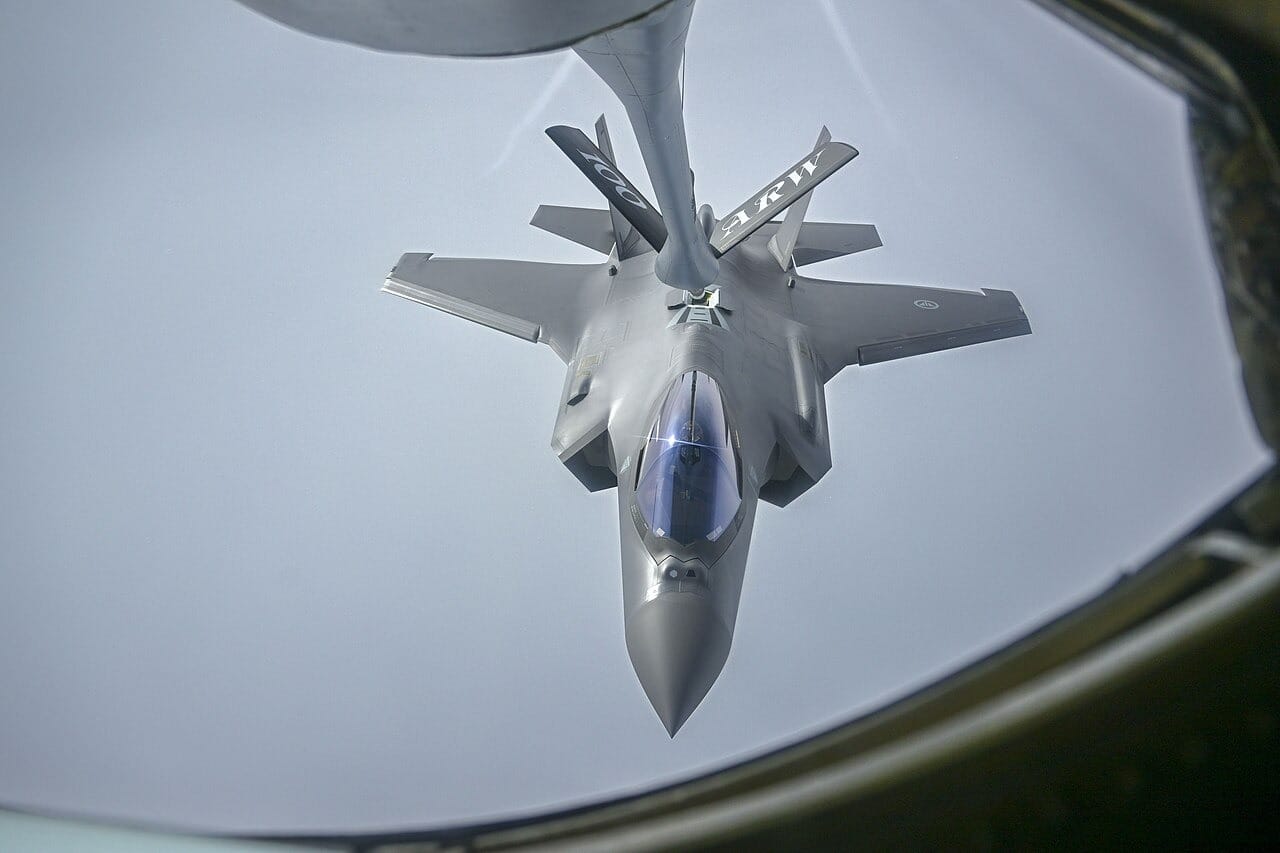

Norway’s 52-aircraft F-35 order was fully delivered by April 2025, but seven of those fighters remained in the United States. Six supported pilot training at Luke Air Force Base. The seventh was assigned to testing a Norwegian missile that would expand what the fleet could do.
That distribution captures the substance behind Norway’s April 28 milestone at Ørland Air Base. The country marked completion of its planned fighter deliveries and received its first Joint Strike Missiles, or JSMs. The aircraft purchase had reached its numerical endpoint while weapons integration, stockpiling and support infrastructure continued to develop.
The last three Norwegian F-35s had been delivered from Lockheed Martin’s factory on April 1, according to the Norwegian Defence Materiel Agency. The agency’s program account put 45 aircraft at Ørland that month, alongside the seven in America. A completed national order therefore did not mean all 52 aircraft were physically based in Norway or available for the same duties.
The missile work explains one of those continuing commitments. The agency said an aircraft would remain in the United States for JSM testing connected with new F-35 software. That software was needed to exploit the capabilities associated with the fighter’s first major upgrade. Receiving missiles allowed Norway to accumulate stocks while the aircraft received the necessary software, preparing for their subsequent operational use.
JSM was developed by Kongsberg Defence & Aerospace with Norwegian defense organizations for attacks on targets at sea and on land. Its dimensions allow internal carriage in the F-35A, an arrangement intended to preserve the aircraft’s low observability and operating range. The missile also incorporates sensors and two-way communications. Those characteristics help explain the attraction of pairing a domestically developed weapon with an American-built fighter.
The April handover established that weapons deliveries had begun. It did not provide a missile inventory total or declare that every aircraft had completed the required integration. For a weapons program, having hardware in storage and having the aircraft configuration needed to employ it are related milestones with separate schedules.
Norway’s fighter force was already doing operational work. The country received its first F-35s in the United States in 2015 and its first aircraft on Norwegian soil in 2017. It achieved initial operational capability in 2019, then transferred NATO quick-reaction alert duties from the F-16 to the F-35 in January 2022.
The Ministry of Defence’s April account also pointed to deployments to Iceland and a recent NATO mission in Poland. Completing the aircraft order strengthened an existing force rather than creating one from scratch.
Keeping that force available required further investment. The ministry reported construction underway on an F-35 maintenance facility at Rygge to build national expertise and readiness. Norway had finished accepting its planned fighters; it still had years of upgrades, weapons work and maintenance ahead to turn those aircraft into sustained military capacity.
Sources
- Norway unveils its first new super missile, JSM, and celebrates delivery of all 52 F-35 fighter jets — Norwegian Ministry of Defence · 2025-04-28.
- Første JSM-missiler er klare for Norges F-35 – en ny epoke for Forsvaret — Norwegian Defence Materiel Agency · 2025-04-25.
- Kampflyprogrammet — Norwegian Defence Materiel Agency · 2025-05-06.