
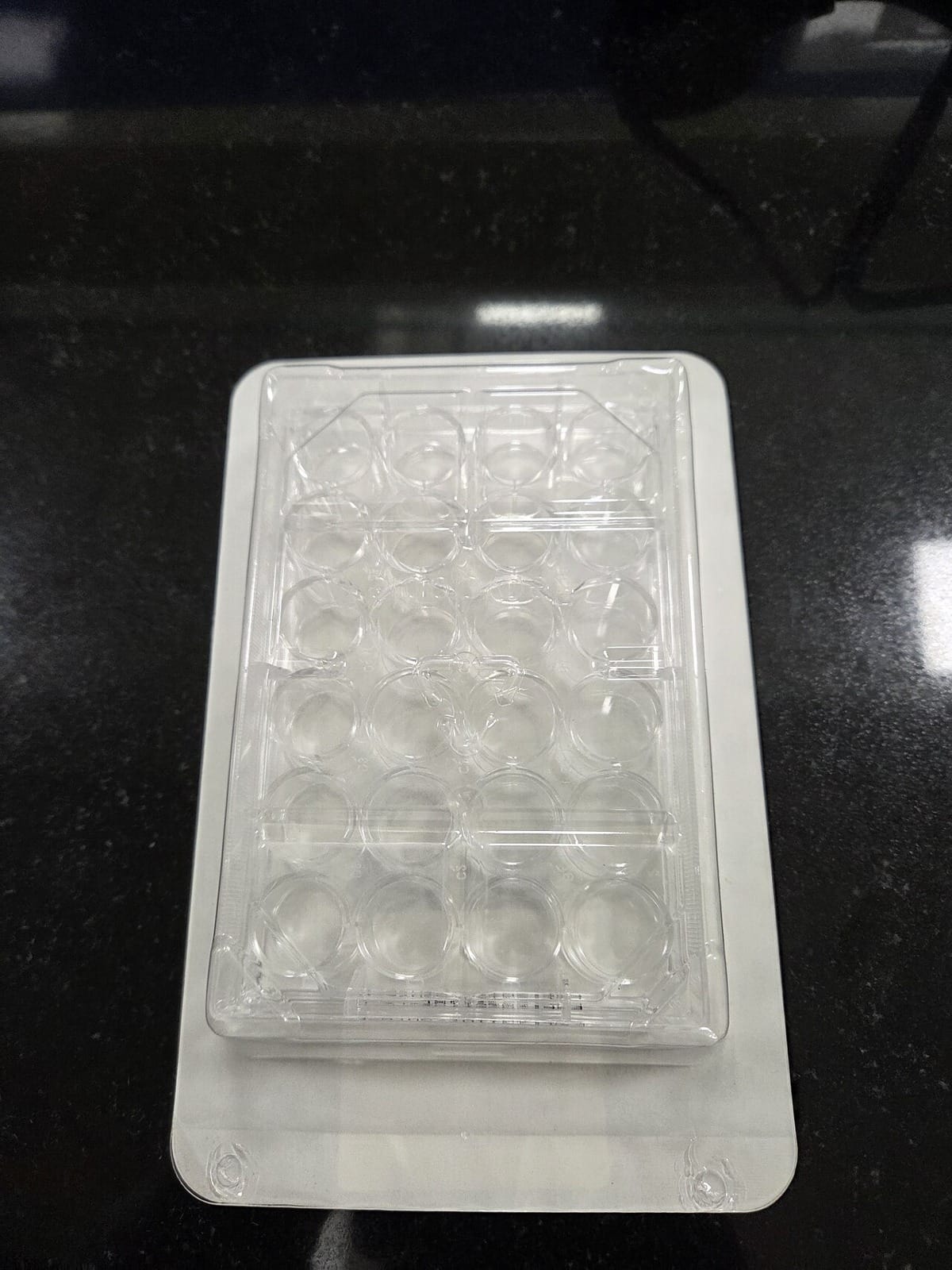

Testing a finished protein cannot reveal everything about the process that made it. In 2025, NIST addressed that gap with a reference material that could grow: a Chinese hamster ovary cell line engineered to produce a well-characterized monoclonal antibody.
The agency's June 30 notice described Reference Material 8675, NISTCHO, as a publicly accessible tool for biomanufacturing research, measurement and training. The package contained a nominal 10 million cryopreserved cells in a one-milliliter vial. Its purpose was to give researchers a common biological starting point for studying production, rather than requiring each group to develop its own reference cell line.
NIST had already supplied an antibody reference protein, NISTmAb, since 2016. That material helped laboratories assess the instruments and methods used to characterize a protein. A living producer opened a different set of questions: how did culture conditions, reactor design, purification or storage influence the resulting material?
NIST developed the cell-line reference with MilliporeSigma and the National Institute for Innovation in Manufacturing Biopharmaceuticals. In its September explanation, the agency said manufacturers of equipment and culture media could use the resource to investigate their technologies. The same platform could support workforce training in a process whose essential working component is a living population of cells.
The physical complication is variability. Cells do not produce an absolutely identical collection of protein molecules under every condition. Changing the environment can change both cell performance and characteristics of the product. A shared cell line gives experimenters a way to compare those effects while holding one important input more consistent.
The development research went beyond selecting cells that produced antibody. The researchers evaluated candidate clones in multiple culture models, measuring growth, productivity and product quality. They mapped the location of the inserted genetic material at base-pair resolution, enabling identification of the NISTCHO line using PCR methods. An independent laboratory also performed a validation study, according to the research summary published by NIST.
Those details explain why a reference cell line requires more than putting a biological sample in a catalog. Other laboratories need to know what they received and have tools for checking its identity. They also need evidence that the material can support useful work beyond the facility where it was created.
The resulting antibody was named cNISTmAb. NIST's release specified that it had the same primary amino-acid sequence as the established NISTmAb reference. That did not make every production condition interchangeable or remove the need to characterize the output. It established a useful relationship between the living system and an existing measurement reference.
The use restrictions were equally specific. RM 8675 was limited to non-commercial research use and excluded use in humans or animals, including clinical, diagnostic and treatment purposes. It was research infrastructure, not a ready-made manufacturing license for a therapeutic product.
For a laboratory developing a sensor, a culture method or a bioreactor, the practical gain was a more comparable experiment. A common starting material could make a claim about improved production easier for another team to test. The 2025 milestone strengthened that shared measurement foundation without claiming that one reference could settle every question in a biological factory.
Sources
- An RM for Assessing the Performance of Bioprocess Measurement Systems — NIST · 2025-06-30.
- NIST’s Living Reference Material Could Accelerate R&D of Lifesaving Biological Drugs — NIST · 2025-09-08.
- Development and characterization of the NISTCHO reference cell line — NIST · 2025-03-18.