
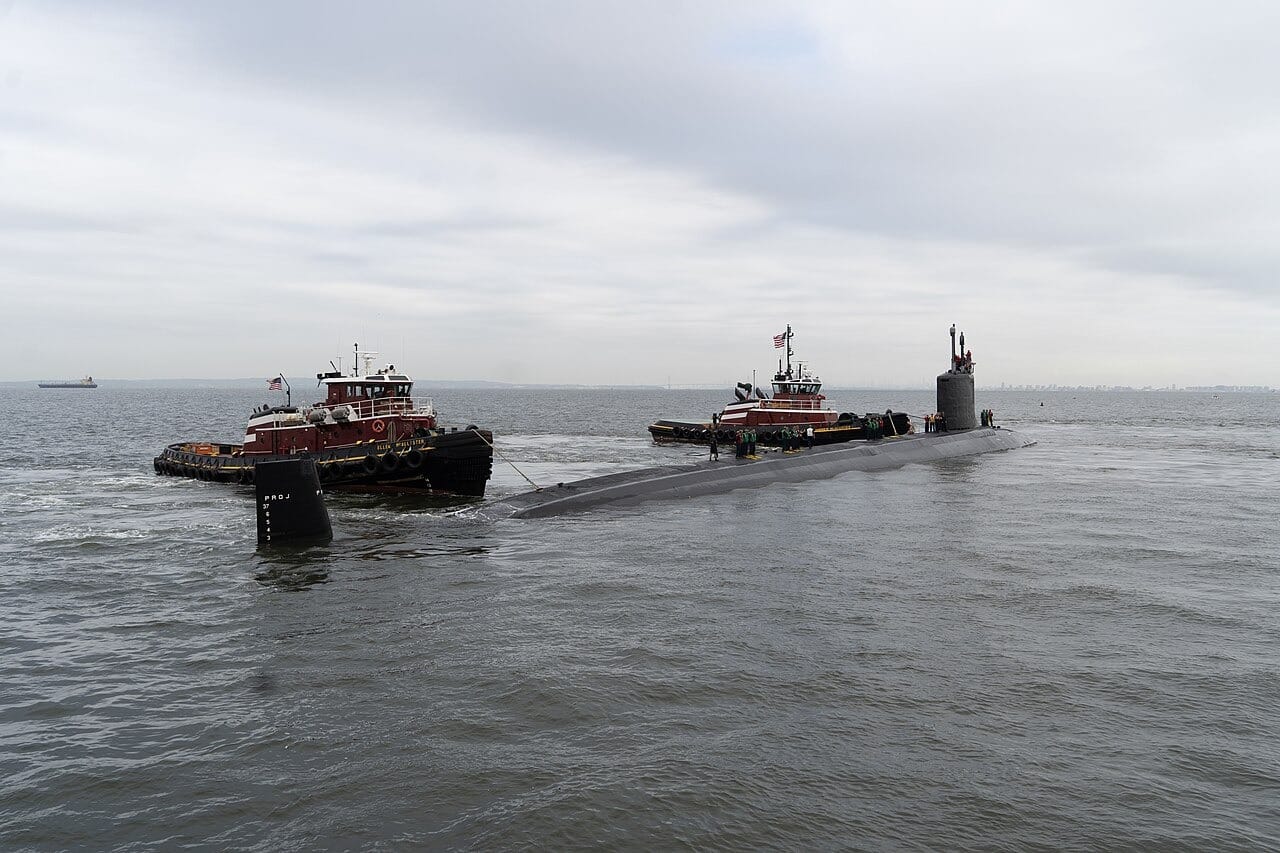

Steps beside stacked bunks and easier-to-reach overhead valves were among the consequential changes aboard USS New Jersey. When the submarine entered service on September 14, 2024, the Navy gained an attack boat whose original design accommodated the mixed crew that would operate it.
The commissioning at Naval Weapons Station Earle followed delivery by Newport News Shipbuilding on April 25. New Jersey was the 23rd Virginia-class submarine built through the partnership between HII’s Newport News division and General Dynamics Electric Boat, and the 11th delivered by Newport News. Delivery transferred the completed vessel to its customer; commissioning formally placed it in naval service.
Its distinction was not that women had never served beneath the surface. The prohibition ended in 2010, female officers began reporting to submarines the following year, and enlisted women entered the force in 2016. By September 2024, Senator Jack Reed’s office, citing Submarine Forces Atlantic data, reported 730 women assigned to operational submarines. The personnel change preceded this particular ship by years.
New Jersey incorporated that reality from the design stage. Reed’s office described berthing changes for privacy, steps to reach triple-high bunks and adjustments to overhead valve heights. Those details addressed everyday use of tightly packed spaces. They also illustrated why opening a career field and designing equipment for the people entering it are related but separate undertakings.
A submarine’s staffing problem includes places to sleep, wash and work throughout an extended period underwater. Building those requirements into a new hull gives the service a more deliberate starting point than adapting arrangements after construction. The 2024 records support that design achievement; they do not quantify a retention increase or prove that the modifications alone improved combat performance.
New Jersey’s nearly 135-person crew would operate a 377-foot fast-attack submarine assigned a broad mission set. The Navy described anti-submarine and anti-ship warfare, intelligence gathering, special operations support and strikes ashore among the functions of these boats. Those missions require both a technically capable platform and trained people able to live and work aboard it.
The boat’s Block IV design addressed another constraint on usable naval capacity: time in a shipyard. The Navy’s class description explains that component-life improvements were intended to reduce planned major depot maintenance periods from four to three, making room for 15 deployments instead of 14 over a submarine’s life. Those numbers were design and scheduling objectives, not deployments New Jersey had already completed at commissioning.
Together, the accommodation changes and maintenance plan showed two ways to extract more service from an expensive hull. One concerned which qualified sailors the ship could comfortably accommodate; the other concerned how often the ship could be available to sail. September’s ceremony marked entry into service, while the practical value of both decisions would depend on years of training, maintenance and operation by the crew.
Sources
- Navy commissions USS New Jersey (SSN 796) — U.S. Navy · 2024-09-16.
- Reed: Commissioning of USS New Jersey Launches a New Era for Gender-Integrated Submarines — Office of Senator Jack Reed · 2024-09-13.
- HII Delivers Virginia-Class Submarine New Jersey (SSN 796) to U.S. Navy — HII · 2024-04-25.
- Attack Submarines / Fast Attack Submarines — Commander, Submarine Force, U.S. Pacific Fleet.