
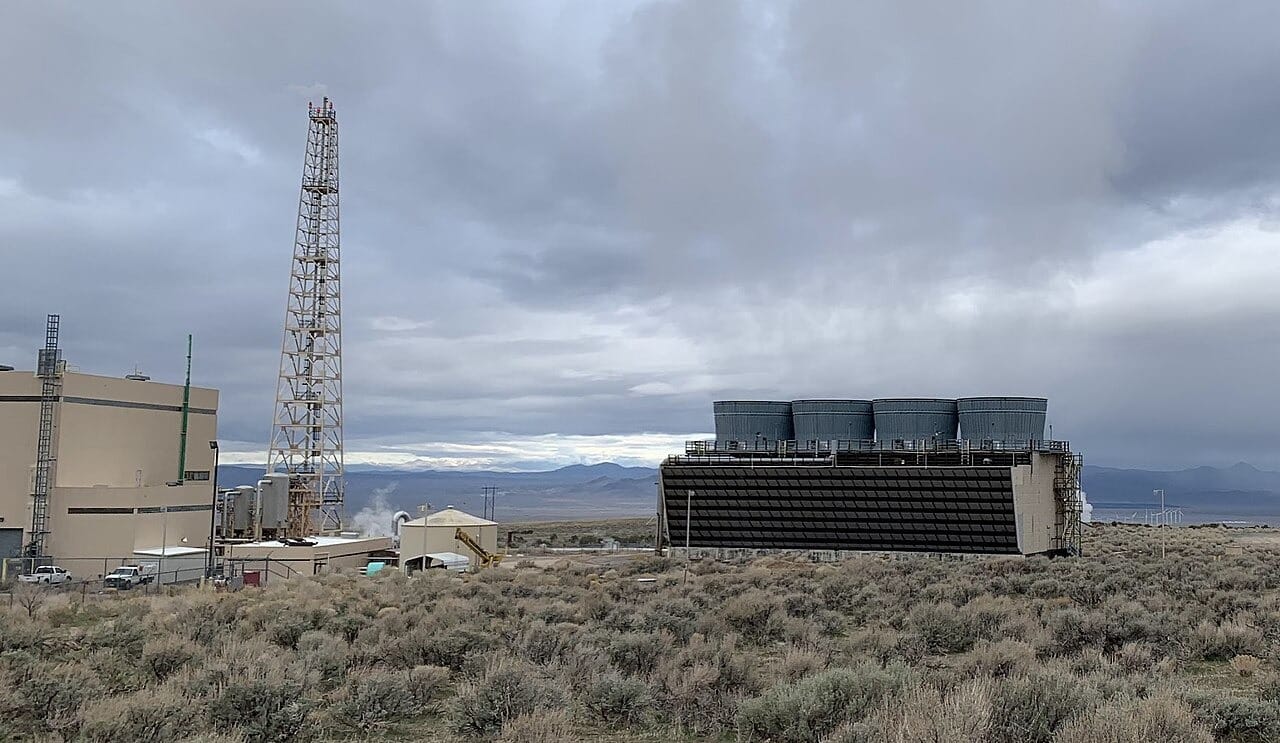

Cape Station’s first geothermal generating unit began commercial operation on September 30, 2026, six days after connecting to the grid. Fervo Energy said the Beaver County, Utah, plant had produced 33 megawatts net and started earning revenue under its power-purchase agreement.
The October 1 announcement marked the transition from commissioning to contracted electricity sales for one unit. Two other roughly 33-megawatt units in the first phase were still being commissioned, with contractual operation targeted by January 1, 2027.
Cape Station uses enhanced geothermal technology to reach heat in rock that lacks the natural fluid pathways needed for conventional geothermal production. DOE describes three basic requirements: heat, fluid and permeability—the ability of fluid to move through rock.
Operators create or reopen fractures under controlled conditions, allowing fluid to circulate through hot rock and carry heat back to the surface. The reservoir is therefore part of the engineered power system, alongside wells and generating equipment.
That is why the first unit’s operating record matters beyond its starting date. Reaching the contracted output threshold establishes a commercial milestone; sustained production will provide evidence about the reservoir and plant over time.
Fervo said another 400 megawatts was already under construction, with operation expected in 2028. Those planned additions were separate from the first unit’s reported output.
The immediate expansion test was close at hand: bring the other two first-phase units through commissioning while the first accumulated experience supplying the grid.
Sources
- Fervo Energy Declares Commercial Operation at Cape Station Ahead of Schedule — Fervo Energy · 2026-10-01.
- Enhanced Geothermal Systems — U.S. Department of Energy.