

Nine hundred kilograms of enriched material is a concrete achievement in a fuel market often described through proposed factories and future reactor orders. On June 25, 2025, Centrus Energy said its American Centrifuge Operating subsidiary had produced and delivered that quantity of high-assay low-enriched uranium, or HALEU, to the Department of Energy.
The delivery completed the production target for the second phase of a federal demonstration contract. It raised the cumulative amount delivered under the contract to more than 920 kilograms, following an initial 20-kilogram delivery in 2023. The material belonged to DOE, rather than constituting a freely available commercial stockpile held by the company.
That ownership helps explain what the milestone was intended to accomplish. DOE said the material would support fuel qualification and testing for advanced reactor designs through its allocation process. Demonstrating enrichment and obtaining material for development programs were immediate tasks. A dependable commercial market supplying multiple operating reactors was a larger undertaking.
HALEU refers to uranium enriched above 5 percent and below 20 percent uranium-235, the isotope relevant to sustaining the fission reaction. DOE said many advanced reactor designs need that higher concentration to support smaller designs, longer operating cycles or other performance goals. The designation describes enrichment, not a single finished fuel product suitable for every reactor.
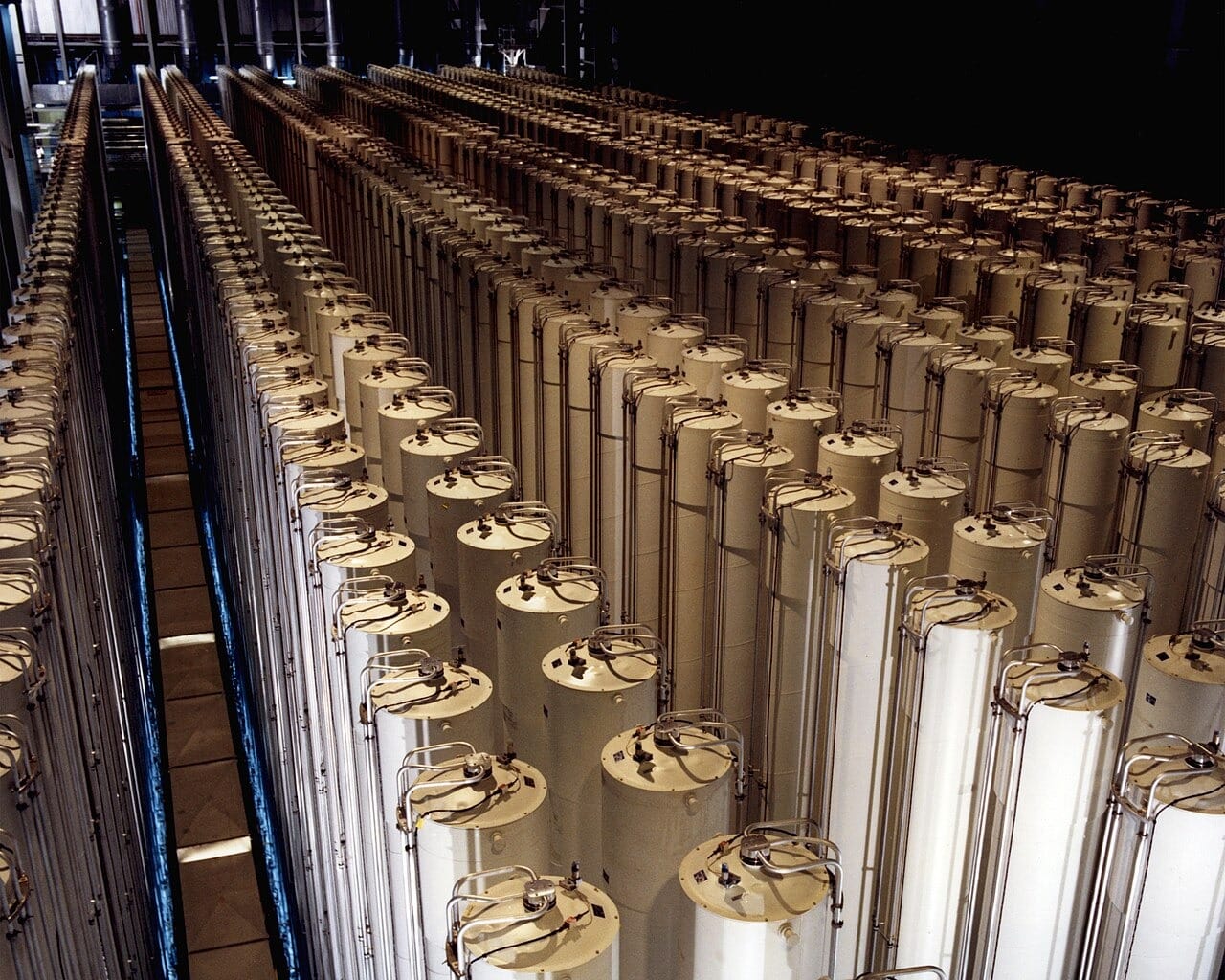
At Piketon, Ohio, the demonstration used a cascade of 16 advanced centrifuges. DOE contracted for the project in 2019 and awarded the follow-on production contract in 2022. The sequence mattered: an initial small quantity established production, and the subsequent 900-kilogram target required a larger cumulative output. June's announcement recorded completion of that second task, rather than simply an increase in a factory's theoretical rating.
Further industrial work still stood between enriched material and an assembled fuel load. The enrichment process handled uranium hexafluoride. DOE's description of deconversion services explains the next chemical transformation: converting enriched material into forms such as uranium metal or oxide that can be used in fuel manufacturing.
Fuel fabrication then turns the appropriate material into the fuel required by a particular reactor design. Counting enrichment output as if it were already a reactor's completed fuel would collapse these distinct activities. Progress at one step is necessary, but the steps downstream need their own equipment, capacity and execution.
Centrus also entered the next production phase with a defined extension. The company had announced an additional year through June 30, 2026, and DOE described another 900 kilograms of production over that period. Options could support further years, but Centrus specified that those depended on DOE's discretion and available appropriations. An option was not an unconditional order for all possible future output.
The June milestone therefore supplied two useful measures of progress: material had actually been produced, and another production period had been authorized. It also left a clear industrial agenda. Enrichment needed to become repeatable at greater scale, while deconversion and fabrication had to turn that upstream output into the particular fuels advanced reactors would consume.
Sources
- Centrus Achieves Key Production Milestone with Delivery of 900 Kilograms of HALEU to the Department of Energy — Centrus Energy · 2025-06-25.
- Centrus Reaches 900 Kilogram Mark for HALEU Production — U.S. Department of Energy · 2025-06-25.
- HALEU Deconversion Services — U.S. Department of Energy.