
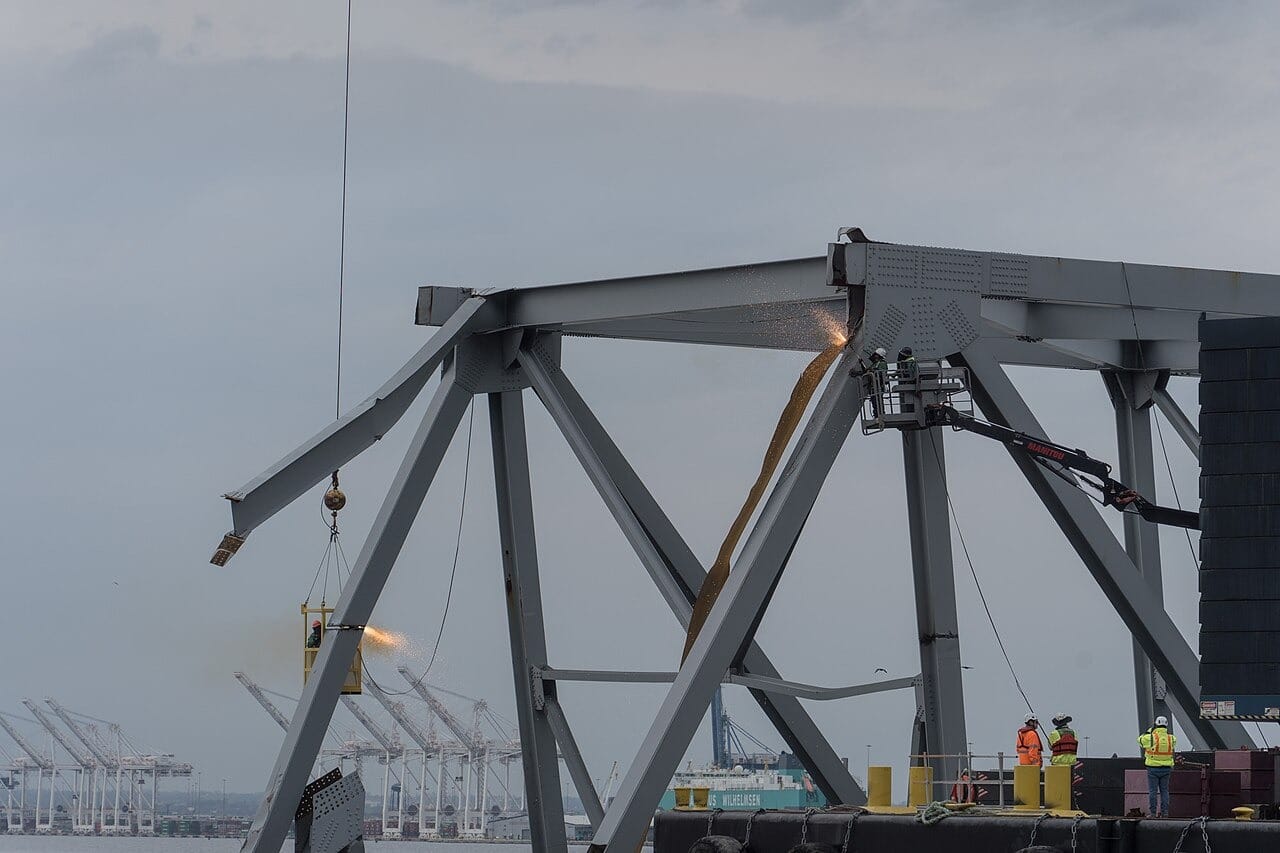

Fifty feet of depth was only part of Baltimore's recovery. The shipping channel also needed room across it. On June 10, 2024, the Fort McHenry Federal Channel returned to its full 700-foot width, giving the port more flexibility to handle traffic after the Francis Scott Key Bridge collapse.
The Army Corps of Engineers and the Navy's Supervisor of Salvage and Diving announced the restoration after removal of roughly 50,000 tons of wreckage. A survey that day certified the channel's riverbed for safe transit. The milestone restored a passage through the disaster site; it did not replace the bridge or finish the region's recovery.
Six workers had died in the March 26 collapse, a loss Maryland officials acknowledged when marking the port's reopening on June 12. The Dali's collision with the bridge had also created a physical obstruction across the route used by ships serving the harbor. The response had to recover access while protecting people working around damaged steel, vessels and submerged debris.
The channel reopened in stages. The Dali was moved on May 20, and a 400-foot-wide route at the full 50-foot depth followed. That permitted the deep-draft vessels that had used the port before the collapse to transit, the Corps reported. Restoring the additional width in June provided flexibility for two-way movement and allowed restrictions associated with the narrower passage to be relaxed.
This distinction explains why reopening was a sequence rather than a single switch. Depth determines whether a vessel can use a passage; width influences how movements can be arranged. A port can regain access for large ships while still operating with constraints on the flow of those ships.
The navigation notice covering the June 10 reopening specified round-the-clock commercial availability and a 214-foot vertical clearance. It also retained the surrounding safety zone and required transiting vessels to stay within marked channels and clear of salvage activity. Access had returned under defined operating conditions, even as work continued nearby.
Maryland's June 12 account said more than 1,500 people from federal, state and local agencies had contributed to reopening the main route. The public terminals directly supported 8,000 workers, including longshoremen and truckers, according to the state. That employment connection made channel clearance an economic priority as well as a marine-engineering assignment.
The distinction between capacity and recovery still mattered. A clear passage made ship calls possible. It did not itself demonstrate that cargo volumes, work hours or business revenue had immediately returned to their earlier levels. Those depended on the decisions of shipping lines, cargo owners and the firms connecting the docks to inland destinations.
Bridge rebuilding was on a separate track. At the June reopening, Maryland was seeking a design-build team for the replacement. The water route could function again while the missing road crossing remained a major transportation problem.
June 10 supplied a precise achievement in that larger recovery: the surveyed channel again offered its original navigable dimensions. The final measure of the salvage effort was a usable route through the river, with the rules and verification needed to put it back to work.
Sources
- U.S. Army Corps of Engineers announces full restoration of Baltimore’s Fort McHenry Federal Channel — U.S. Army Corps of Engineers via DVIDS · 2024-06-11.
- Port of Baltimore, Fort McHenry Channel Reopening Transit Update — U.S. Army Corps of Engineers · 2024-06-11.
- Governor Moore Announces the Full Reopening of the Port of Baltimore — Maryland Department of Transportation · 2024-06-12.