
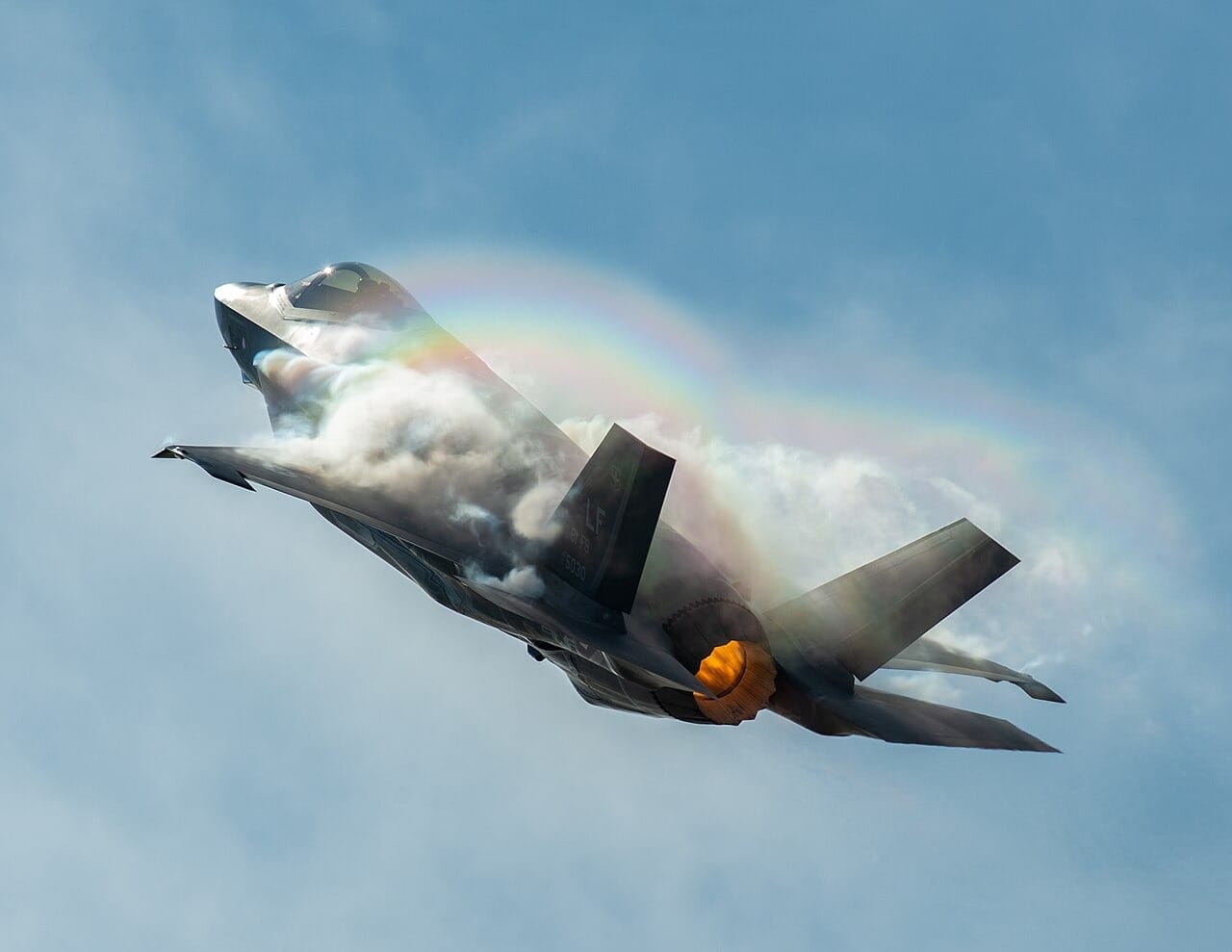

The F-35s that began leaving the factory again in July 2024 could help train pilots before they could deliver the full combat capability promised by their new hardware and software. That distinction made the restart useful to receiving units—and incomplete as a modernization milestone.
On July 19, the F-35 Joint Program Office announced delivery of two Technology Refresh 3 aircraft: F-35As bound for Dannelly Field, Alabama, and Nellis Air Force Base, Nevada. Program executive Lt. Gen. Mike Schmidt described an initial training capability for July and August, followed by a stronger combat-training capability. Full TR-3 combat capability remained a goal for 2025 in that announcement.
Acceptance still required government airworthiness certifications and check-out flights, the office said. Those procedures established that an aircraft could be accepted under the arrangement. They did not establish that every planned mission function was ready. A delivery count therefore needed a second piece of information: the capability configuration of the aircraft being counted.
The distinction mattered because the broader F-35 program had already reached full-rate production in March 2024. GAO’s May assessment described that milestone as the conclusion of baseline development and final simulated testing. Yet the same report identified TR-3 hardware and software delays as an obstacle to the separate Block 4 modernization effort. A mature production designation for the baseline fighter did not resolve the newer configuration’s development problems.
TR-3 was the hardware-and-software foundation needed for that modernization. GAO identified supplier setbacks, software problems and supply-chain difficulties. Completing an airframe and completing the systems that made its new configuration usable had become different scheduling problems.
A later GAO investigation, published in September 2025, explained the government’s 2024 trade-off. Provisional acceptance of noncombat-capable TR-3 aircraft reduced the risk of accumulating more than 100 airplanes at contractor facilities. Moving them to units made training possible while work continued on upgrades. The government withheld approximately $5 million per noncombat-capable aircraft, with portions releasable against specified criteria, including weapons validation or processor performance. That was a conditional payment mechanism, not a statement that the airplane cost $5 million or that the amount was permanently forfeited.
The receiving unit in Alabama supplied a concrete reason to accept the compromise. The 187th Fighter Wing had not expected additional jets until year-end. Deputy commander Col. Christopher Germann said the arrival would increase pilot flying hours and give maintainers more hands-on experience. For a unit building proficiency, access to another aircraft had immediate training value even while software development continued elsewhere.
The restart did not erase the industrial backlog. GAO’s retrospective accounting found that all 110 aircraft Lockheed Martin delivered in 2024 were late, by an average of 238 days. July’s decision reopened a path from factory to flight line; it left operators, program managers and the contractor with the separate task of turning accepted training aircraft into the combat configuration the acquisition program still owed.
Sources
- F-35 TR-3 Deliveries Begin — F-35 Joint Program Office, hosted by Lockheed Martin · 2024-07-19.
- First TR-3 F-35 arrives in Alabama — 187th Fighter Wing · 2024-07-19.
- F-35 Joint Strike Fighter: Program Continues to Encounter Production Issues and Modernization Delays — Government Accountability Office · 2024-05-16.
- F-35 Joint Strike Fighter: Actions Needed to Address Late Deliveries and Improve Future Development — Government Accountability Office · 2025-09-03.