
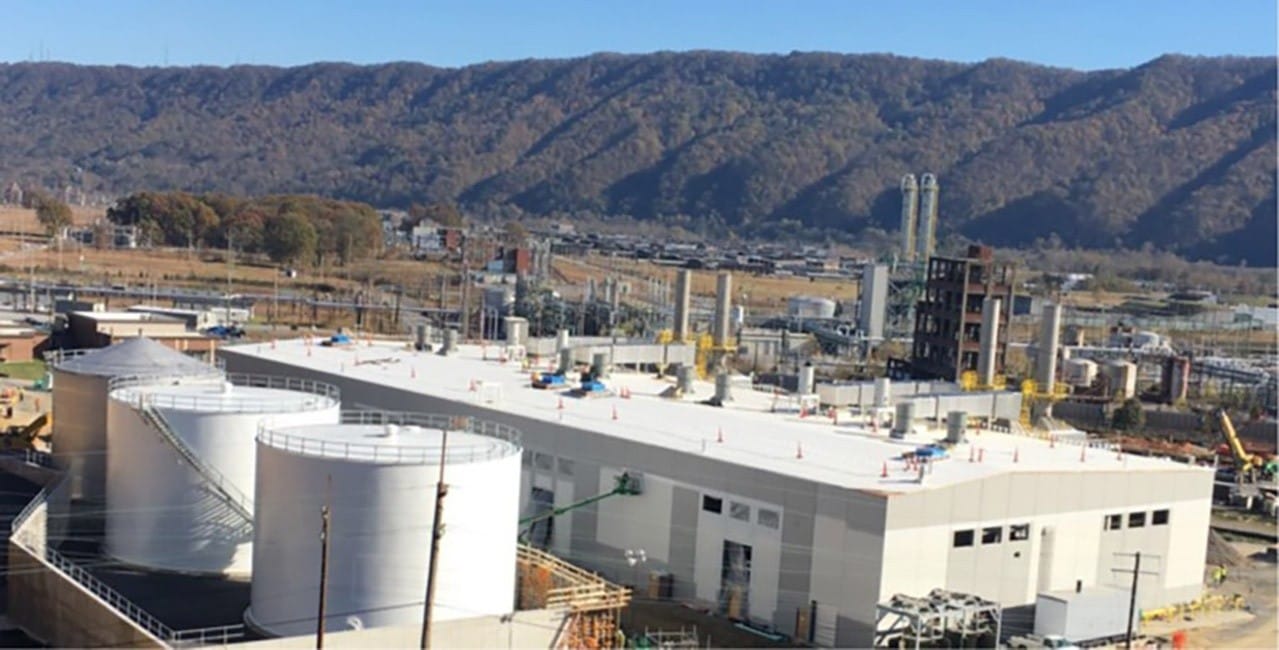
At the Holston Army Ammunition Plant in Tennessee, one substantial investment in American military capability took the form of wastewater treatment. Fourteen projects, completed between 2014 and 2019 at a combined cost of $135 million, doubled the existing treatment facility. The Army said the work followed a compliance agreement to reduce releases of RDX, an explosive used in military ammunition, into the nearby river.
The improvement was measurable. According to the Army's October 2019 account, the monthly average daily discharge fell from about 100 pounds in 2011 to less than 3.5 pounds in 2018. Those are historical figures, not a description of today's water quality. They show what rebuilding an arsenal can require: substantial construction whose contribution to national defense is cleaner water leaving a factory.
Seven years later, the public conversation has a new protagonist. In an October 27 report, The Wall Street Journal's Heather Somerville describes Odin Energetics, a venture between chemical manufacturer Solugen and Kraken Kinetics, seeking to supply explosives for military drones. The partners have committed $115 million, the Journal reports, and executives say they could begin supplying the military in small quantities next year.
Odin's arrival matters. A new producer could introduce another source of supply, attract capital and challenge assumptions about how quickly factories can be built. But the larger question extends beyond any startup's chemistry: Can America finance, qualify, staff and sustain enough dependable production to meet a military demand that may rise sharply—and later retreat?
An Army request for industry ideas this month puts that dilemma unusually plainly. For an energetics initiative at Blue Grass Army Depot in Kentucky, the service wants projects commissioned within 48 months or less. It also wants facilities that can remain commercially viable during periods of few or no government orders, without planned recurring federal support for ordinary operating costs.
Washington wants production available when an emergency comes. It is also asking companies to explain who will pay to keep that production alive before the emergency. The answer will shape which factories get built and how long they endure.
The distance from a demonstration to a delivery
Energetics is the industry's umbrella term for materials including explosives, propellants and pyrotechnics. The term can make the supply problem sound like one shortage. It is a collection of different products, manufacturing capabilities and customer approvals. Expanding one part of that collection does not establish that every other part can keep pace.
Kraken's launch announcement describes Odin as a distributed supply venture with access, through Solugen, to domestic precursor chemicals—the inputs used before a finished energetic material exists. The company is proposing to connect that chemical supply with a new way of organizing production.
Odin says its modular factories can be built in six months, according to the Journal. That is a construction claim. Moving from a demonstration to regular deliveries also requires military customer approval of the material for its intended use.
Odin's completed qualification milestones and accepted military delivery volumes remain unverified. Its reported target of small deliveries next year leaves a further commercial test: winning repeat orders and fulfilling them consistently.
Congress assigned the Joint Energetics Transition Office responsibilities that include the qualification process from discovery through production and integration into weapons. The Navy's Indian Head systems engineering organization also lists energetic-material qualification among its responsibilities. Customer acceptance has an institutional path of its own.
Qualification establishes that a material or product meets the requirements for its intended use. Money for equipment and money for approval have to arrive in a workable sequence. Otherwise, a manufacturer can finish one expensive stage and wait for another organization to have people, funding and room on its schedule.
That makes the path to an accepted delivery a shared undertaking. The supplier needs a government customer prepared to carry the work through its own decisions and deadlines.
While new entrants pursue military customers, the Army still has to sustain the factories it already owns.
The factory includes the river
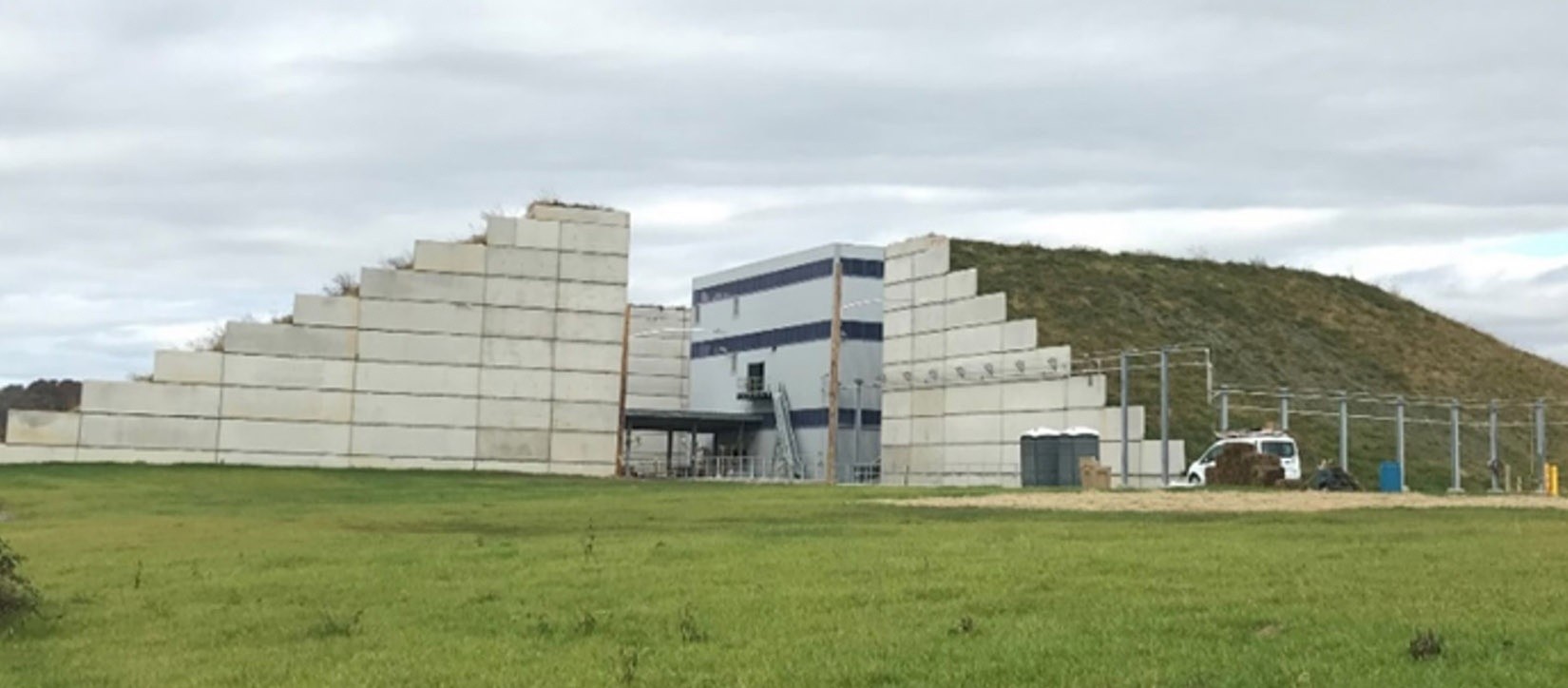
Photo details
The U.S.Army’s April23,2024 article identifies this as the fluid-energy-mill building at Holston. Exact capture date is not supplied; it is a historical image of the incumbent plant, not a new startup’s facility. Credit in the source: U.S.Army photo. Original composition retained.Holston, in Kingsport, is a government-owned plant operated by BAE Systems, an arrangement the Army confirmed in February 2026. The owner, operator and military customers can have different responsibilities for buildings, production and purchasing. A demand for more material therefore brings another question: who must repair the infrastructure underneath it?
The Army's February 24 congressional testimony described ammunition facilities facing obsolete equipment, unplanned downtime and buildings beyond their useful lives. Some problems, it said, require new construction because maintenance and upgrades are no longer sufficient. It also emphasized keeping production going during modernization. The country has to repair parts of the industrial base while continuing to rely on them.
That makes continuity a design requirement for industrial investment. If a replacement facility arrives late, its predecessor may have to carry the workload longer. If an existing line closes before its successor is accepted, nominal future capacity provides little comfort to the customer waiting for material. An expansion plan needs a credible handover as much as a credible construction budget.
The Holston water project illustrates another part of that handover. Treatment, utilities, maintenance and environmental compliance belong inside the definition of usable capacity. They are the services that allow a factory to operate over time. Their costs should appear in the original business case, where planners and communities can examine them, rather than emerge as an unwelcome discovery after the main equipment is ordered.
The Army reported that regulators closed the relevant compliance agreements in 2019. That completed improvement is a useful historical example; it does not certify the plant's current environmental performance.
Blue Grass offers a different kind of inheritance. In a July 2026 account, the Army described plans to reuse infrastructure from the depot's former chemical-agent destruction complex for an energetics production facility. Demolition associated with the earlier mission was expected to be completed in 2027. The proposed expansion would give parts of an established federal site another industrial life.
Senator Mitch McConnell's February summary of enacted fiscal 2026 funding lists $903 million for expanding energetics manufacturing capacity at Blue Grass. That puts substantial public money behind the initial expansion. The Army is now asking how the business would sustain itself afterward.
Its current request, still at the market-research stage, seeks a commercial model able to cover ordinary operations, maintenance and staffing after establishment. That condition reaches into the future of every proposed building: what work will support it in a quiet year, and what obligations will remain to the military if civilian customers are paying the bills?
Commercial sales could provide an anchor. A persuasive plan would identify the customers and revenues supporting ordinary operations, then explain how the facility would meet defense demand when required. The government needs both a viable business and dependable access to what it can produce.
Who pays for the quiet years?
The Army has stated the other side of the bargain. In its February testimony, it said ammunition production lines must remain warm when requirements fall, and identified unpredictable workloads, skill gaps and recruitment difficulties as challenges. A warm line is a capability kept ready to work. Its value includes what it can do later, even when current purchases do not fill its schedule.
This creates two different products for the government to buy: material delivered now, and the ability to obtain more later. The second requires an explicit business arrangement. A contractor cannot pay experienced employees with a forecast, and a lender cannot collect interest from a general statement that the nation needs a stronger arsenal.
Public money to build a plant solves an initial capital problem. It does not necessarily cover the operating years that follow. Private equity can absorb development risk, but it expects a return. Debt provides cash today in exchange for future payments. None of those funding sources eliminates the need for an identifiable customer or a separately funded readiness obligation.
At Graham, in western Kentucky, the Army has contemplated a longer relationship. In November 2024, it announced an action with a $435 million ceiling for Repkon USA to design, build and commission a TNT facility. The Army said at the time that its TNT supply chain depended entirely on overseas sources. Restoring domestic production would require establishing the plant before buying its output.
Four years of base work. Ten years of options.

Read the graphic / Data and notes
| Years from contract start | Period |
|---|---|
| 0–4 | 4-year base: design and construction. |
| 4–9 | 5-year option: follow-on production orders. |
| 9–14 | 5-year option: follow-on production orders. |
Source: Government Accountability Office, Global Military Products, Inc.; B-423175.2, February 25, 2025. The potential period is 14 years: a four-year base and two five-year options. It does not establish commissioning, exercised options, purchases, capacity or current status. See Sources at the article’s end.
Options offer a route to future work; they should not be mistaken for guaranteed purchases. A proposed plant's financing will depend on the commitments actually made, including the consequences if demand changes. A long potential contract term can be useful while still leaving a supplier exposed to considerable uncertainty.
The same discipline should apply to competition. Buying every unit from the lowest-cost source may leave a second source unable to remain in business. Paying several producers regardless of performance can waste money. The policy task is to price the additional supply security explicitly, then require evidence that the country is receiving it. Redundancy has value only when another qualified source can actually deliver.
Nor can organizational responsibility be left vague. In 2022, GAO found that the Army's governing documents for ammunition procurement and production had not kept up with changes in roles. Its public follow-up records the Army saying in May 2026 that it expected to finish the updates later in the year, after reorganization. Clear responsibility is a practical part of production: someone must resolve decisions that cross institutional boundaries.
A national capacity built by local people
One revealing workforce program happens in a swimming pool. In July 2024, the Navy's Indian Head division completed a three-week internship in which 12 high-school students, working in teams, built underwater remotely operated vehicles. Navy scientists and engineers mentored them. The program introduced local students to technical work and the possibility of a career at the Maryland installation.
The internship was an introduction to technical careers, not qualification to operate a factory. Its significance lies in how early that introduction came. A summer program creates exposure; sustained education, training and supervised experience must carry prospective workers from that first encounter to a production shift.
For a new plant, staffing therefore belongs in the same schedule as construction and customer approval. The relevant questions concern more than a projected job total. How many positions have been filled? Which require experience the local labor market cannot quickly supply? Who will train new employees, and who will retain the people doing the training? An industrial expansion can transfer a scarce workforce between employers without increasing the country's total capability very much.
The safety obligation is equally concrete. The Army's modernization objectives include reducing human exposure to hazardous work through automation. That gives workforce investment a second purpose: people must be prepared to operate and maintain the equipment meant to protect them. A safety improvement needs trained staff and sustained maintenance to remain an improvement after commissioning.
The broader chemical supply chain needs attention at the same time. In February 2024, the Defense Department announced $192.5 million in awards to seven companies to establish domestic manufacturing of critical defense chemicals, with capacity expected by the end of 2027. The program included inputs for energetics. Its schedule is a reminder that a finished-material producer can depend on another expansion proceeding several steps upstream.
The right measure of independence reaches beyond the address on the factory's sign. A domestic plant may still need a sole-source input, specialized maintenance or equipment from abroad. A resilience review should trace those dependencies far enough to identify where production could stop. It should also distinguish vulnerabilities requiring another supplier from those better addressed through inventories, repair capability or a dependable allied arrangement.
Allies are rebuilding too. Britain's Ministry of Defence announced in July 2026 that 22 companies would receive contracts worth up to £300,000 each to study possible energetics factory sites. The strongest proposals could advance to engineering-design contracts worth up to £5 million each, with construction planned to begin by year's end.
For American planners, those investments could eventually create additional sources and opportunities to share industrial work. But allied countries have domestic customers to serve. The practical opportunity is to negotiate access, qualification and delivery arrangements while expansion is being planned, so that cooperation can produce a dependable second source.
From the Holston treatment works to the British site studies, the projects address different pieces of the same industrial problem. Their lasting value will depend on connecting construction, customer approval and a workforce with enough continuing business to remain ready.
The supply plans run on different clocks

Read the graphic / Data and notes
| Project | Dated public record | Expectation or relative term |
|---|---|---|
| Critical defense chemicals | 1 Feb 2024: Awards announced | by end 2027: Capacity expected. Seven awardees’ expectation, reported by DOD. |
| Repkon TNT facility | 8 Nov 2024: Award announced; 25 Feb 2025: Terms described by GAO | Four-year base; two five-year options. Relative term described by GAO; no calendar finish inferred. |
| Odin Energetics | 27 Oct 2026 · WSJ: Venture launch reported | 2027 · executives, via WSJ: Small military deliveries |
Dates locate the cited documents, not the start or completion of a measured production phase. The November 8, 2024 Repkon mark dates the Army announcement, not the award itself. Odin’s company launch announcement is dated only to October 2026; the mark uses the October 27 Wall Street Journal report. The 2027 delivery expectation is attributed to executives in that reporting. The Defense Department reported the seven companies’ capacity expectation.
Repkon’s four-year base and two five-year options are kept outside the calendar. No completion date is calculated from the contract term. Options do not guarantee purchases. The chart contains no continuous progress lines; absent marks do not establish zero output or a failed milestone.
Blue Grass’s fiscal 2026 funding and October industry request, and the UK’s July feasibility awards, remain in the five-record table at the end of this article. A requested commissioning duration and possible later design awards are not treated as calendar completion dates. See Sources at the article’s end.
Editorial analysis: five commitments that would make expansion durable
Five priorities emerge from these records. These are PVweekly.com's policy proposals: establish what the country needs and already has, make demand credible, and fund the work required to keep production dependable through changing military requirements.
First, commission an accountable inventory of usable capacity. The Pentagon should reconcile military requirements with accepted output, qualified backup sources and projects still in development. Public reporting can disclose broad progress without revealing sensitive inventories, locations or operational vulnerabilities. Each funded project should have a responsible official and dated milestones for financing, construction, commissioning, customer approval and first delivery.
An independent reviewer should examine milestone claims before major follow-on payments. If a project slips, the responsible official should explain the effect on the remaining schedule and identify how existing suppliers will cover the gap. Accountability would follow the project's contribution to supply, as well as its spending.
Second, pay explicitly for the production readiness the country needs. For established requirements and proven products, the government should seek longer purchasing commitments where justified and authorized. Where demand is too uncertain to support a second source, it should consider a competitively awarded payment for verified availability. Such an arrangement would purchase a defined readiness service, with measurable obligations and consequences for failing them.
The boundary matters. Companies should still bear ordinary commercial risks and demonstrate efficient operation. A readiness payment should not become a permanent entitlement for an idle building. Contracts should specify the qualified workforce, maintained capability and delivery responsiveness being purchased, while allowing the government to end or rebid an arrangement that fails. The cost of resilience would then be visible, instead of hidden inside optimistic sales assumptions.
Third, finance qualification alongside construction. A new entrant seeking public capital should have an agreed path to customer acceptance, with a named government sponsor, funded evaluation work and scheduled decision points. The purpose is to remove avoidable waiting between organizations while preserving the evidence needed for approval. Shared access to government testing and qualification resources could help smaller firms compete on the quality of their products.
Funding should arrive in stages tied to completed work. Early money can support demonstration and evaluation; later commitments should reflect commissioning and acceptance. This would give promising suppliers a path forward while limiting the exposure if a project fails before it can supply the military.
Fourth, make people, utilities and environmental performance conditions of the investment. Every major expansion should carry a funded staffing and training plan, a maintenance budget and a credible path through the relevant approvals. Local colleges, employers and public agencies should agree on paid training opportunities early enough to prepare workers before opening. Communities should receive understandable information about applicable monitoring, emergency coordination and compliance responsibilities.
These costs should be compared across competing proposals on the same basis. A cheaper construction estimate is less persuasive if it leaves wastewater treatment or workforce preparation for someone else to fund later. Existing plants should receive transition plans that protect supply while improvements proceed. New facilities should demonstrate how their promised operating advantages will be measured over time.
Fifth, buy diversity across the supply chain, including dependable allies. A second domestic producer is valuable, but it may share the first producer's vulnerable input. Procurement teams should assess those common dependencies and target investments accordingly. Allied agreements can complement domestic expansion through qualified alternative sources, clearer delivery commitments and coordinated investment. Their contribution should be counted only at the stage the evidence supports.
Odin should be judged within that framework. If it completes qualification, secures repeat orders and delivers consistently, its contribution will be concrete. The same test applies to a modernized government plant or a new allied supplier. The next decisive milestone is an accepted delivery from a capable producer—and a contract that gives the people who made it a reason to remain ready for the next one.
Project records behind this report
| Project | Documented milestone | What the record does not establish |
|---|---|---|
| Odin Energetics, United States | October 2026 venture launch; small 2027 military deliveries predicted by executives in WSJ reporting | Qualified output, accepted military deliveries or binding repeat orders |
| Blue Grass energetics initiative, Kentucky | Fiscal 2026 funding; October industry request seeks commissioning within 48 months and commercial operating viability | Awarded production contract or commissioned expansion |
| Repkon TNT facility, Graham, Kentucky | 2024 design/build/commission award; 2025 GAO decision describes initial 4-year effort plus production options | Completed commissioning, exercised future options or deliveries |
| Critical-defense-chemical awards, United States | February 2024 awards to seven companies; capacity expected by end 2027 | Completion or accepted output across the funded projects |
| UK energetics factory program | July 2026 feasibility awards to 22 companies; potential engineering-design awards afterward | Completed factories or supply available to the United States |
Selected dated records through October 27, 2026. These are not an exhaustive account of current operating status or comparable measures of output. Missing public information does not establish that a milestone has failed. Sources below.
Sources
- U.S. Army, Holston's wastewater modernization and historical discharge results, October 31, 2019.
- Heather Somerville, The Wall Street Journal, “America Needs Explosives for Its Drones. This Startup Is Making Them.”, October 27, 2026. Odin financing and delivery statements above are attributed to this reporting.
- Kraken Kinetics, Odin Energetics launch announcement, October 2026.
- U.S. Army, Blue Grass Energetics Center of Excellence request, W519TC-26-R-0019, October 2026.
- U.S. Congress, law establishing the Joint Energetics Transition Office, section 241, December 22, 2023; Naval Sea Systems Command, Indian Head systems engineering responsibilities.
- U.S. Army, Holston installation and operator, February 17, 2026; Army leaders, joint congressional testimony on industrial-base modernization, February 24, 2026.
- U.S. Army, Blue Grass infrastructure transition, July 2026; Senator Mitch McConnell, fiscal 2026 Kentucky funding summary, February 2026.
- U.S. Army, TNT facility contract announcement, November 8, 2024; Government Accountability Office, Global Military Products bid-protest decision, February 25, 2025.
- Government Accountability Office, Army ammunition management findings and implementation updates, October 13, 2022, with 2026 follow-up.
- Naval Sea Systems Command, Indian Head's 2024 student engineering program, July 30, 2024.
- U.S. Department of Defense, critical-defense-chemical manufacturing awards, February 1, 2024.
- UK Ministry of Defence, energetics factory feasibility awards, July 29, 2026.