
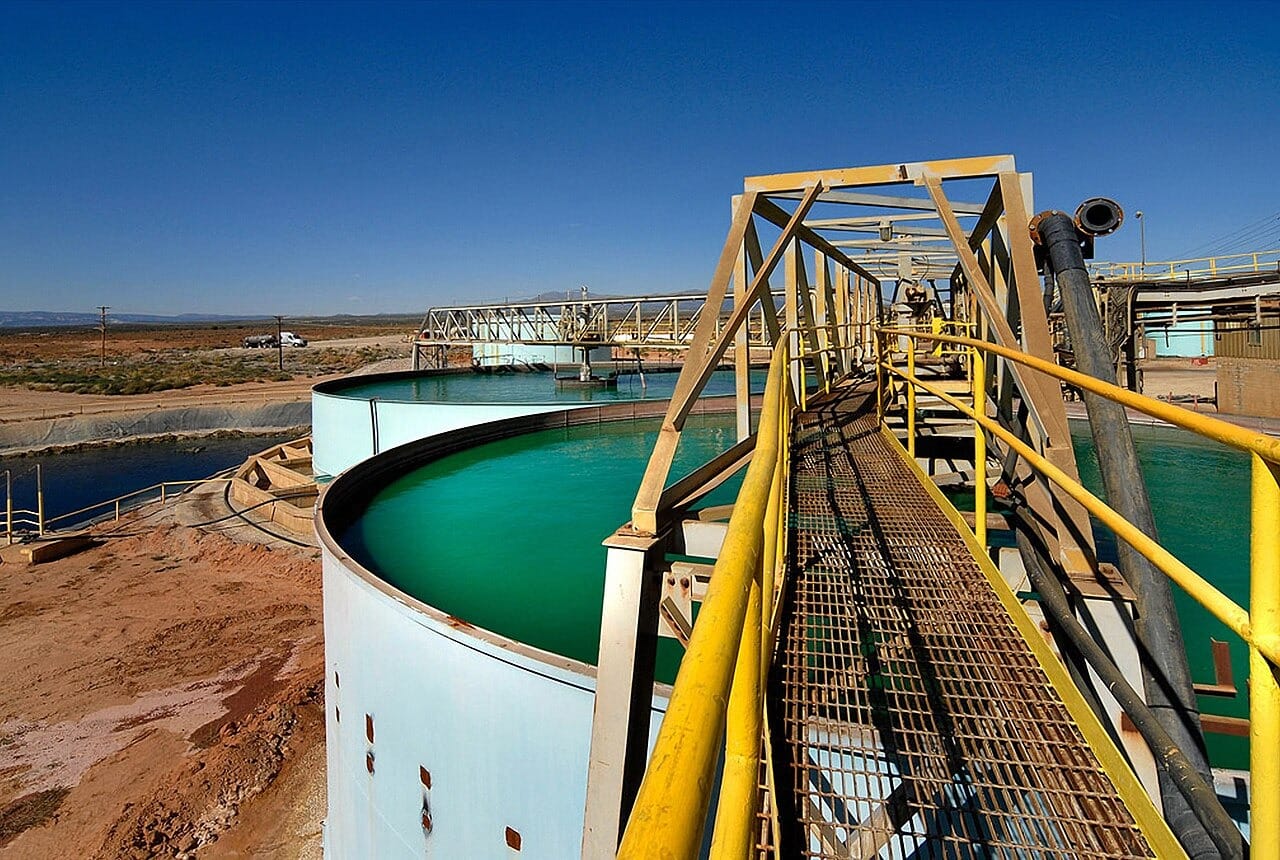

One kilogram of terbium oxide gave Energy Fuels something it could put in a prospective magnet customer’s hands. On March 25, 2026, the company reported producing the material at its White Mesa Mill in Utah from monazite mined in Florida and Georgia.
Energy Fuels reported 99.9 percent purity at pilot scale and said the material met permanent-magnet manufacturers’ specifications. Several magnet makers and equipment manufacturers had requested samples for validation. Those were company-reported results, not independent assay or customer-qualification findings.
Terbium and dysprosium help permanent magnets retain useful properties at high temperatures. That makes their processing relevant to motors and actuators used in vehicles, robotics and defense equipment. Energy Fuels had also recently reported nearly 30 kilograms of high-purity dysprosium oxide.
The next production step was much larger. In February guidance, the company outlined enhancements to White Mesa’s existing Phase 1 circuit for annual recovery of up to 12 tonnes of terbium and 35 tonnes of dysprosium. The targets depended on approvals, financing, successful development and sufficient monazite feedstock.
The company had moved the intended commercial start from late 2026 into 2027 to include additional rare-earth elements in the expanded circuit. A successful pilot batch did not complete that work.
For the customers requesting samples, the immediate task was to establish whether the material behaved as needed downstream. The commercial task was to reproduce the specification, repeatedly, in quantities far beyond the first kilogram.
Sources
- Energy Fuels Announces First U.S. Primary Production of Critical Heavy Rare Earth Material in Decades — Energy Fuels via Nasdaq / PR Newswire · 2026-03-25.
- Energy Fuels Announces 2025 Results and 2026 Guidance — Energy Fuels · 2026-02-26.