

TerraPower’s Natrium reactor moved closer to construction in Wyoming on March 4, 2026, when the Nuclear Regulatory Commission authorized issuance of its construction permit. Getting the plant built would answer only part of the deployment question. The reactor also needs a specialized uranium fuel whose U.S. commercial supply was still being developed.
Two months earlier, the Department of Energy had announced $2.7 billion in enrichment awards, split between fuel for the existing reactor fleet and the higher enrichment levels needed by many advanced designs. Together, the decisions show the scope of the nuclear buildout: a reactor project and its fuel industry must progress on connected schedules.
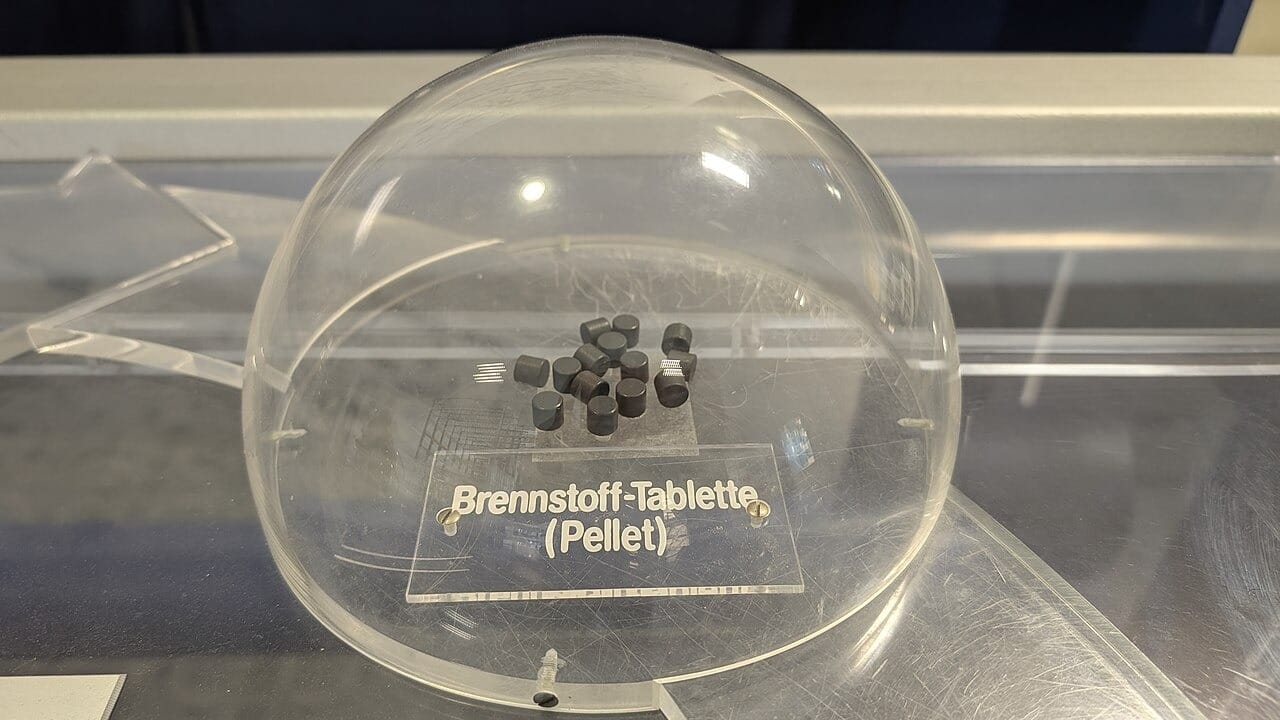
Natrium uses metallic fuel made with high-assay low-enriched uranium, or HALEU, according to TerraPower. That material contains more than 5 percent but less than 20 percent uranium-235, the isotope that sustains the reactor’s chain reaction. DOE’s enrichment program describes its target range as 5 to 19.75 percent.
A construction decision in Wyoming
The NRC’s March action covered Kemmerer Power Station Unit 1, proposed by TerraPower subsidiary US SFR Owner near an existing coal-fired power plant. Non-nuclear site work had begun in June 2024; the commission’s decision allowed the project to proceed toward building the reactor.
The regulator authorized its staff to issue the permit after completing the required safety and environmental findings. Its announcement said issuance would follow shortly. A separate operating-license application and approval would still be required before the facility could run.
Natrium combines a sodium-cooled reactor rated at 345 megawatts electric with molten-salt energy storage. By drawing on stored heat, the plant is designed to raise output temporarily to as much as 500 megawatts. The higher number describes the combined system’s peak output, not a continuous 500-megawatt reactor.
TerraPower said it intended to begin reactor construction in the following weeks and targeted project completion in 2030. DOE’s cost-shared demonstration support extended to fuel development and qualification, a fuel-fabrication facility and a separate sodium-testing facility. Those supporting capabilities are part of bringing the reactor design into service.
Enrichment has its own factories to build
The January 5 awards served two markets. American Centrifuge Operating and General Matter each received a $900 million task order to establish domestic HALEU enrichment capacity. Orano Federal Services received $900 million to expand conventional low-enriched uranium capacity.
DOE described a ten-year effort with payments tied to milestones. The awards support a broader national fuel supply; they were not presented as fuel deliveries reserved for Kemmerer.
American Centrifuge Operating’s parent, Centrus Energy, supplied a concrete manufacturing sequence. It planned to expand its Piketon, Ohio, enrichment plant and had begun centrifuge manufacturing in Oak Ridge, Tennessee, in December 2025. Additional cascades—groups of centrifuges working together—would produce both HALEU and conventional reactor fuel, including feed material for further enrichment.
Centrus expected its first new capacity in 2029. It also reported $2.3 billion in utility purchase commitments contingent on obtaining the financing needed to build the capacity. The company said its federal contract still required finalization in January; up to $170 million in optional production and delivery work was separate from the $900 million base award.
An enrichment plant and a reactor do different jobs. Enrichment raises the concentration of uranium-235. Fuel fabrication then turns material into the form the reactor needs. The Natrium demonstration’s support for fuel qualification and fabrication reflects that additional work between an enrichment award and a loaded reactor.
The 2029 enrichment target and 2030 Natrium target describe parallel development efforts, not proof of a matched delivery schedule. Their connection is more basic: construction permission creates somewhere for advanced fuel to be used, while a functioning fuel industry makes the permitted reactor usable. Progress toward electricity production has to include both.
Sources
- U.S. Department of Energy Awards $2.7 Billion to Restore American Uranium Enrichment — U.S. Department of Energy · 2026-01-05.
- HALEU Enrichment Services — U.S. Department of Energy.
- Centrus Awarded $900 Million to Expand Uranium Enrichment in Ohio — Centrus Energy · 2026-01-06.
- NRC Issues First Commercial Reactor Construction Approval in 10 Years For TerraPower in Wyoming — U.S. Nuclear Regulatory Commission · 2026-03-04.
- NRC Approves the Natrium Reactor Construction Permit — TerraPower · 2026-03-04.
- NRC Issues Construction Permit for TerraPower’s Natrium Advanced Reactor — U.S. Department of Energy · 2026-03-09.
- Natrium FAQ — TerraPower.