
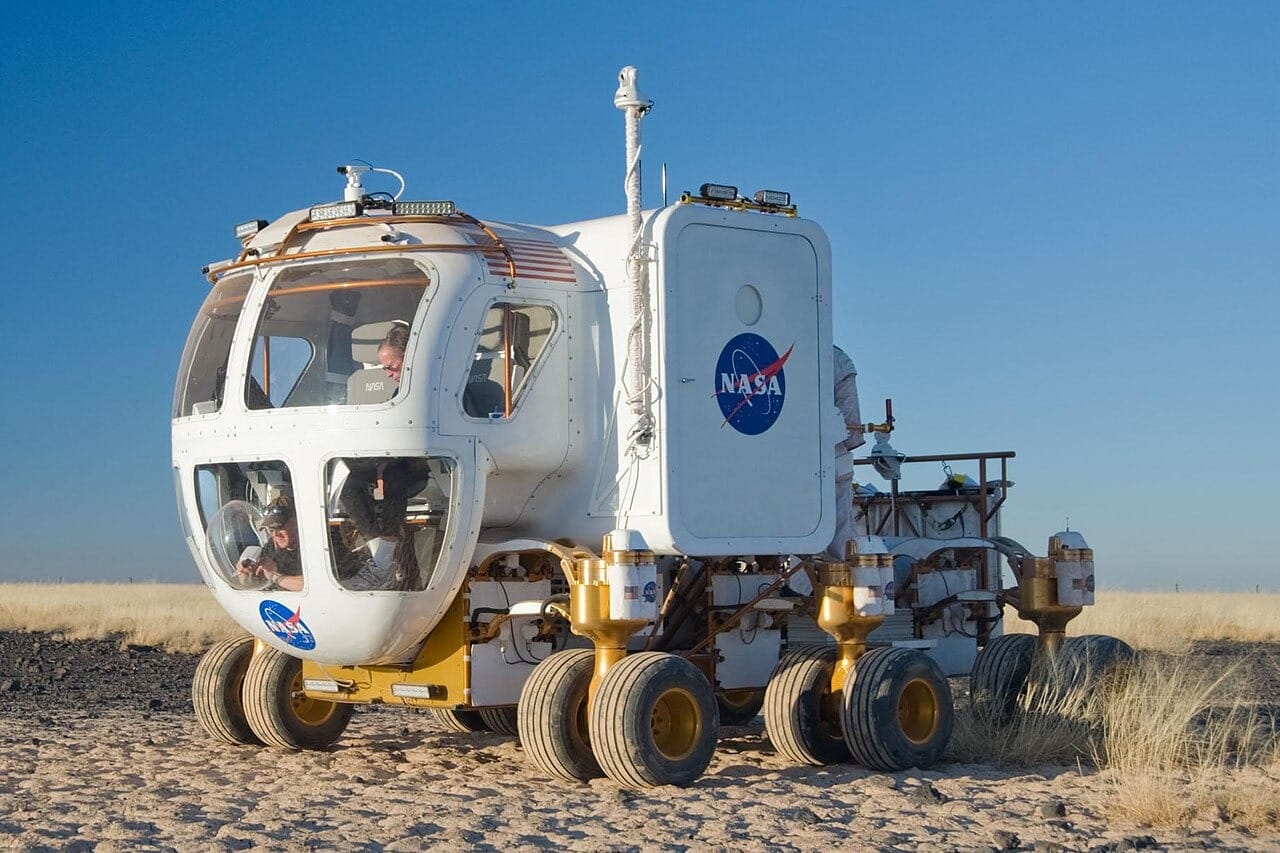

NASA put two rover developers under contract on May 26, 2026, to build vehicles that could move supplies before astronauts arrive and carry crews afterward. Astrolab received $219 million and Lunar Outpost $220 million for the first phase of lunar terrain vehicles.
The agency’s target was to deliver crewed and uncrewed mobility to the Moon by 2028. The firm-fixed-price task orders tied payments to performance milestones, with design completion, astronaut evaluations and flight-hardware qualification planned over the next 18 months.
Astrolab’s CLV-1 drew on its FLEX architecture. NASA described a roughly 2,000-pound rover designed for astronauts, cargo and remote operation. Lunar Outpost’s Pegasus was designed for manual, autonomous or remote driving.
The common requirement was useful work between crew visits. A remotely operated rover could inspect terrain, move materials and position supplies before becoming transportation for astronauts. That gives mobility an early role in building the outpost.
Getting the equipment to the surface requires another set of machines. NASA’s August 4 update described commercial landers progressing through ground tests as part of the same Moon Base effort.
Blue Origin’s first Blue Moon MK1 mission, Endurance, had completed an environmental campaign that included thermal-vacuum testing at Johnson Space Center. It had also checked communications with NASA’s relay and deep-space networks. Integration work and cryogenic-propellant testing remained.
These lander tests address the delivery side of the plan; they do not substitute for qualifying the rovers themselves. NASA’s early robotic missions were intended to gather operating experience and prepare infrastructure ahead of astronauts.
Sources
- NASA Provides Update on Moon Base Rovers, Landers, Missions — NASA · 2026-05-26.
- NASA Provides Updates on Moon Base Cargo Landers, Tech Demonstrations — NASA · 2026-08-04.