
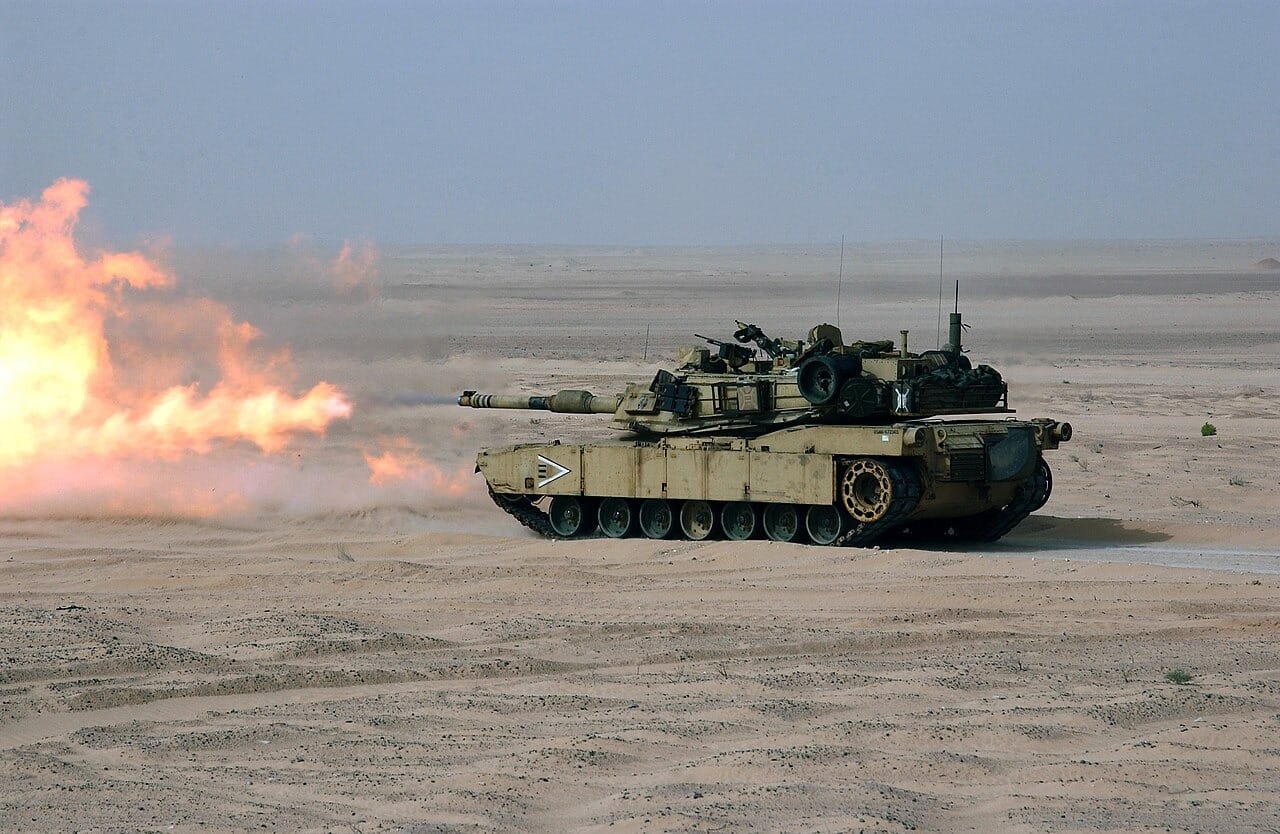

The Army wants its next Abrams upgrade to carry less weight and require less support. An early M1E3 prototype displayed in Detroit in January 2026 offered a first look at the vehicle it is developing to meet that goal.
The Army-led design was produced with Roush, the service said in its January 16 announcement. It combines new digital vehicle controls with a government-owned open systems architecture—the interfaces that allow hardware and software to work together and be changed.
The Army chose this course in September 2023, when it announced that it would close out the planned M1A2 System Enhancement Package version 4 effort and pursue M1E3 development. Officials said the Abrams could no longer keep gaining capability by accepting more weight. They also cited the war in Ukraine in arguing for protection incorporated into the design rather than added afterward.
Weight affects more than the tank itself. Moving and sustaining an armored force also requires transport, fuel and repairs. The redesign links battlefield protection to the work required to get the vehicle into position and keep it operating.
A commercial engine and room to change
April testimony to House appropriators supplied a tangible example of the support strategy: a Caterpillar engine. Army leaders said commercially sourced components would let the service draw on established production, distribution and spare-parts networks.
That approach addresses a different problem from open architecture. Commercial sourcing offers access to an existing industrial base. Open interfaces are intended to reduce the engineering work required when the Army changes electronics, software or other equipment during the tank’s service life.
Both can matter to the mechanic waiting for a part and to the engineer preparing the next upgrade. Neither removes the need to qualify a component for its military assignment or test the complete vehicle.
The January announcement described testing and soldier feedback as inputs to the prototype. In April, Army leaders called it lighter and more fuel-efficient, but their statement supplied no measured comparison. The “E” designation also identifies a prototype or development configuration, rather than a formally classified production model.
The consequential test is whether those choices work together: protection sufficient for the mission, less mass to move, and parts that can be obtained and replaced without creating a new support burden. The prototype gives the Army a vehicle in which to test that balance.
Sources
- US Army unveils early Abrams prototype at North American International Auto Show — U.S. Army · 2026-01-16.
- Army Announces Plans for M1E3 Abrams Tank modernization — U.S. Army · 2023-09-06.
- Statement on the Posture of the United States Army — Department of the Army, House Appropriations testimony · 2026-04-16.