
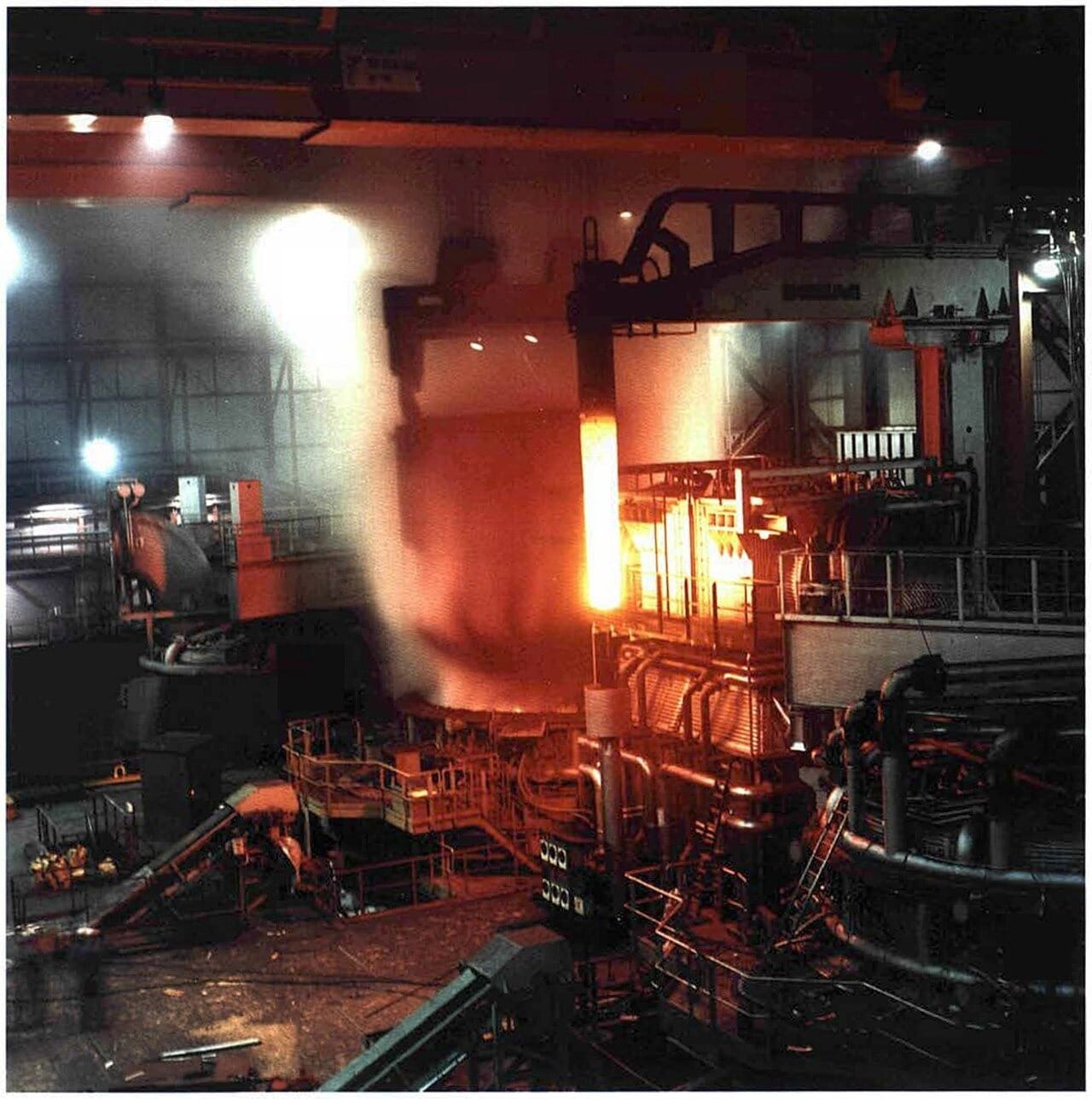

Before Nucor's expansion in Kingman, Arizona, the mill could turn a steel billet into wire rod or reinforcing bar. It could not make the steel that went into that billet. In July 2025, the company reported multiple heats from a new melt shop, adding the upstream production step at an established manufacturing site.
The operating milestone appeared in Nucor's second-quarter investor presentation, furnished to the Securities and Exchange Commission on July 28. The company said the new melt shop would continue ramping up through the third quarter. That wording established a functioning process, while leaving sustained output still to be achieved.
Kingman illustrates a type of industrial expansion that can be obscured by the phrase “new capacity.” The site already had rolling equipment and customers for construction products. Adding a melt shop did not mean starting every activity from an empty field. It meant giving an existing operation the ability to produce its own upstream steel.
When the project was announced in August 2022, the Arizona Commerce Authority described a $100 million electric-arc-furnace investment with annual capacity of 600,000 tons. Nucor expected 140 new jobs at a site that then employed about 80 people. These were announcement figures, rather than a final project account or a verified 2025 employment count.
The original operating target was 2024. By its April 2025 investor presentation, Nucor was planning a first heat in June and operation in the third quarter. July's confirmation of multiple completed heats therefore marked progress against a timetable that had moved beyond the initial announcement. The reviewed records do not explain the full schedule change.
The practical difference is the point at which Kingman enters the production chain. Previously, the rolling mill began with billets: solid intermediate steel shapes that could be processed into products. The added furnace brings scrap-based steelmaking onto the site. Connecting those stages creates a new operating responsibility alongside the new capability—reliably coordinating melt-shop production with the rolling operation.
For customers, the relevant products remained tangible and familiar. Wire rod and rebar serve concrete reinforcement in roads, bridges, buildings and other structures. The expansion's commercial case rested on supplying Western demand for steel bar products, according to the original announcement. Its success would ultimately depend on saleable production and customer demand, rather than the nominal size of the furnace alone.
Nucor's July update offered a useful comparison in North Carolina. Its new Lexington rebar micromill had completed its first continuous melt, cast and roll sequence that month and was also in the early production ramp. Two differently configured projects had reached the same broad stage: making steel, with routine manufacturing performance still developing.
Kingman's 600,000-ton annual rating should be read in that context. It described the melt shop's planned capacity, not an amount produced during 2025. July supplied the evidence that equipment had begun doing its job. The next industrial task was turning those early heats into a dependable supply of finished steel.
Sources
- Second Quarter 2025 Earnings Call presentation — Nucor / U.S. Securities and Exchange Commission · 2025-07-28.
- Nucor Announces $100 Million Steel Production Facility Expansion in Kingman — Arizona Commerce Authority · 2022-08-03.
- First Quarter 2025 Earnings Call presentation — Nucor / U.S. Securities and Exchange Commission · 2025-04-28.