
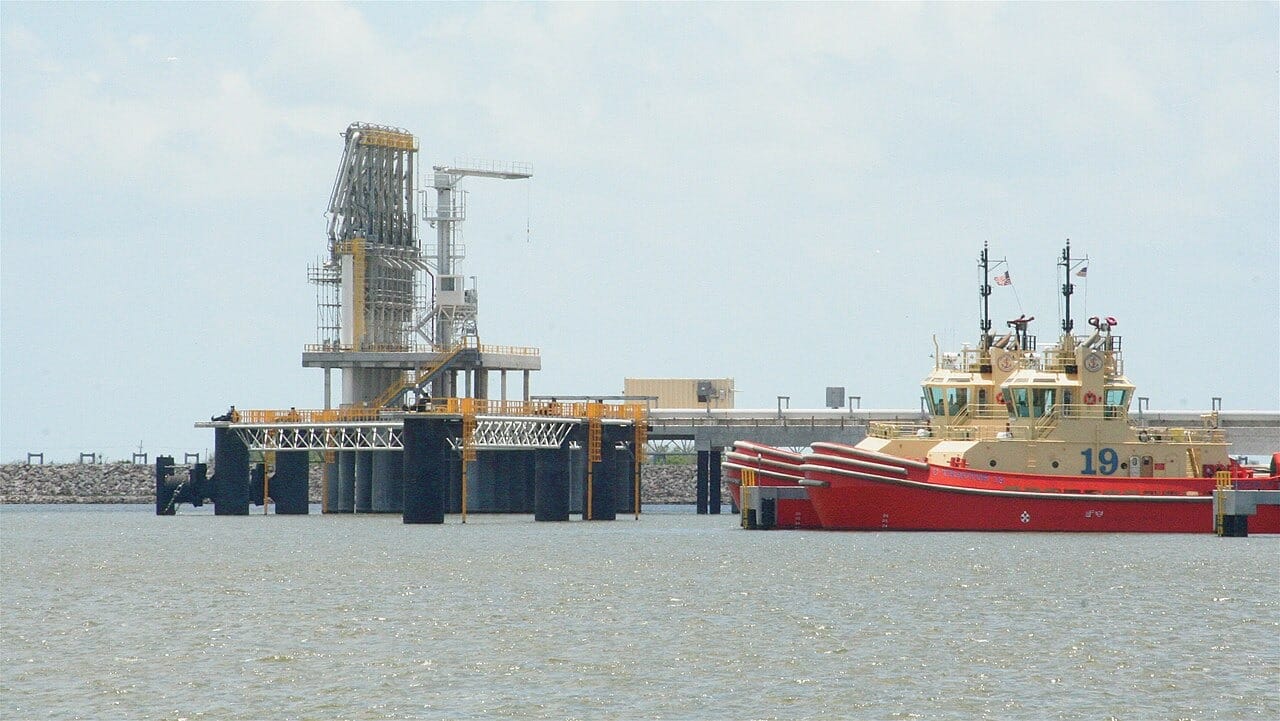

Golden Pass received its first cargo of liquefied natural gas in October 2010. On April 22, 2026, it sent one out.
The first export shipment from the Sabine Pass, Texas, terminal marked a tangible step in a long conversion from importing gas to liquefying U.S. supplies for overseas buyers. The Energy Information Administration counted Golden Pass as the country’s ninth LNG export terminal.
The cargo followed first production from Train 1 in March. A liquefaction train is a processing line that turns natural gas into liquid for shipping. Producing LNG, loading a ship and maintaining steady commercial operations are successive steps; the April announcement documented the first export departure.
Golden Pass said construction and commissioning continued on Trains 2 and 3, which were to follow stable operation of the first. It expected exports of about 18 million tons annually once the full terminal was operating.
A conversion interrupted by construction trouble
The original import project began in 2003, with pipeline construction completed in 2009 and terminal construction in 2010. The company began its export project in 2012 as domestic gas supplies changed the opportunity for the site.
Owners QatarEnergy and ExxonMobil made the final investment decision in 2019. EIA reported that the lead construction contractor’s 2024 bankruptcy delayed completion and required a replacement contractor.
That history gives the April departure its significance. A project that had changed commercial direction and worked through a major construction disruption had delivered a physical cargo.
EIA put the completed three-train project’s nominal capacity at 2.0 billion cubic feet per day, with peak capacity of 2.4 billion. Its April account expected the remaining trains to start in the second half of 2026 and first half of 2027, respectively. Those were contemporary schedules, not evidence that the later starts had occurred.
The terminal’s five storage tanks and two marine berths form the connection between its liquefaction trains and the ships carrying the product overseas. In April, that infrastructure loaded the first export cargo from a site built to receive imported gas.
Sources
- First LNG Export Cargo Departs Golden Pass LNG — Golden Pass LNG · 2026-04-22.
- The 9th U.S. liquefied natural gas export terminal, Golden Pass, ships first cargo — U.S. Energy Information Administration · 2026-04-23.
- About Golden Pass — Golden Pass LNG.