
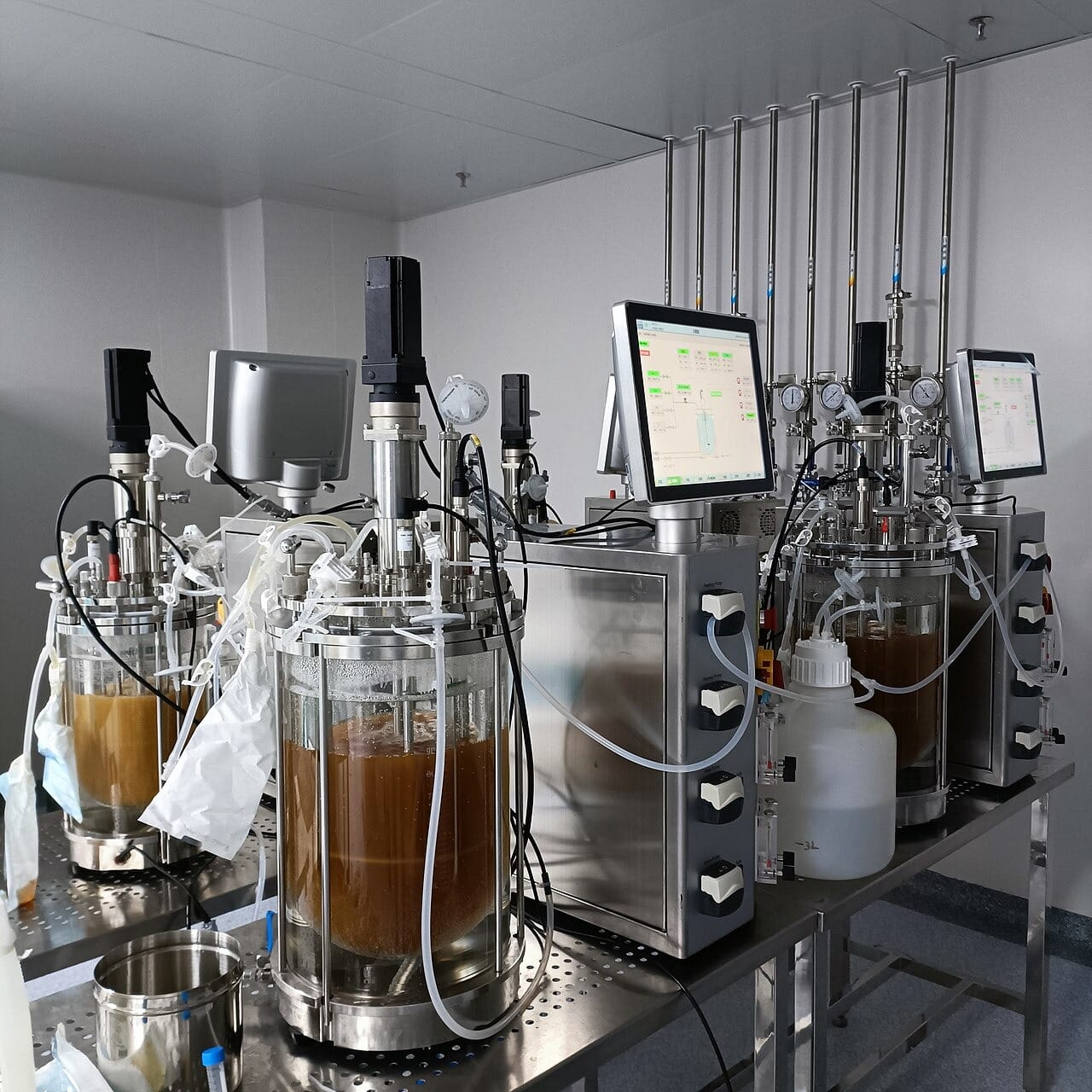

A cell-manufacturing platform installed inside an FDA facility gives the agency a way to study the machinery and process data behind emerging biological products.
BioFabUSA installed the BioFoundry at FDA’s Innovative Technologies and Advanced Manufacturing Hub in Laurel, Maryland, in January. A February 27 Defense Manufacturing Technology Program announcement described a subsequent demonstration of the system. The platform combines modular equipment, automation and closed processing in a setting where regulators can examine how those features work together.
The FDA research project focuses on a difficult manufacturing problem: living cells change as they grow. A process must control that growth while producing useful evidence about the resulting material. A finished sample alone does not reveal everything that happened during a run.
FDA’s project description calls for sensors that follow product attributes, metabolic activity and sterility-related conditions during processing. Researchers will combine those measurements with data analysis to study how manufacturing conditions affect product quality. This is the practical purpose of process analytical technology: obtain information during production that can help explain and control the process.
The first planned case study concerns expansion of induced pluripotent stem cells, which can develop into different cell types. Researchers intend to examine control of cell growth and differentiation. That is a manufacturing research task; the description does not establish an authorized treatment or a clinical result.
The equipment’s modular design also gives researchers a way to investigate different production arrangements without treating every proposed arrangement as an entirely separate factory. FDA identifies potential applications across cell therapies and other biological products. The agency can use the work to inform evaluation methods and its understanding of automated manufacturing.
For defense planners, the attraction is a possible future medical supply chain in which production can be more distributed and closer to need. The February announcement connected the demonstration to that ambition, but it did not establish a deployable field-production capability.
The immediate contribution is more tangible: FDA researchers can study the relationship between equipment settings, sensor readings and biological material on an operating research platform. Those links are what a manufacturer will eventually need to explain when asking a regulator to trust a new production process.
Sources
- BioFabUSA Showcases World’s First Automated BioFoundry at FDA Facility — Defense Manufacturing Technology Program · 2026-02-27.
- BioFoundry: A Scalable, Modular, Automated and Closed Medical Product Manufacturing System — FDA.