
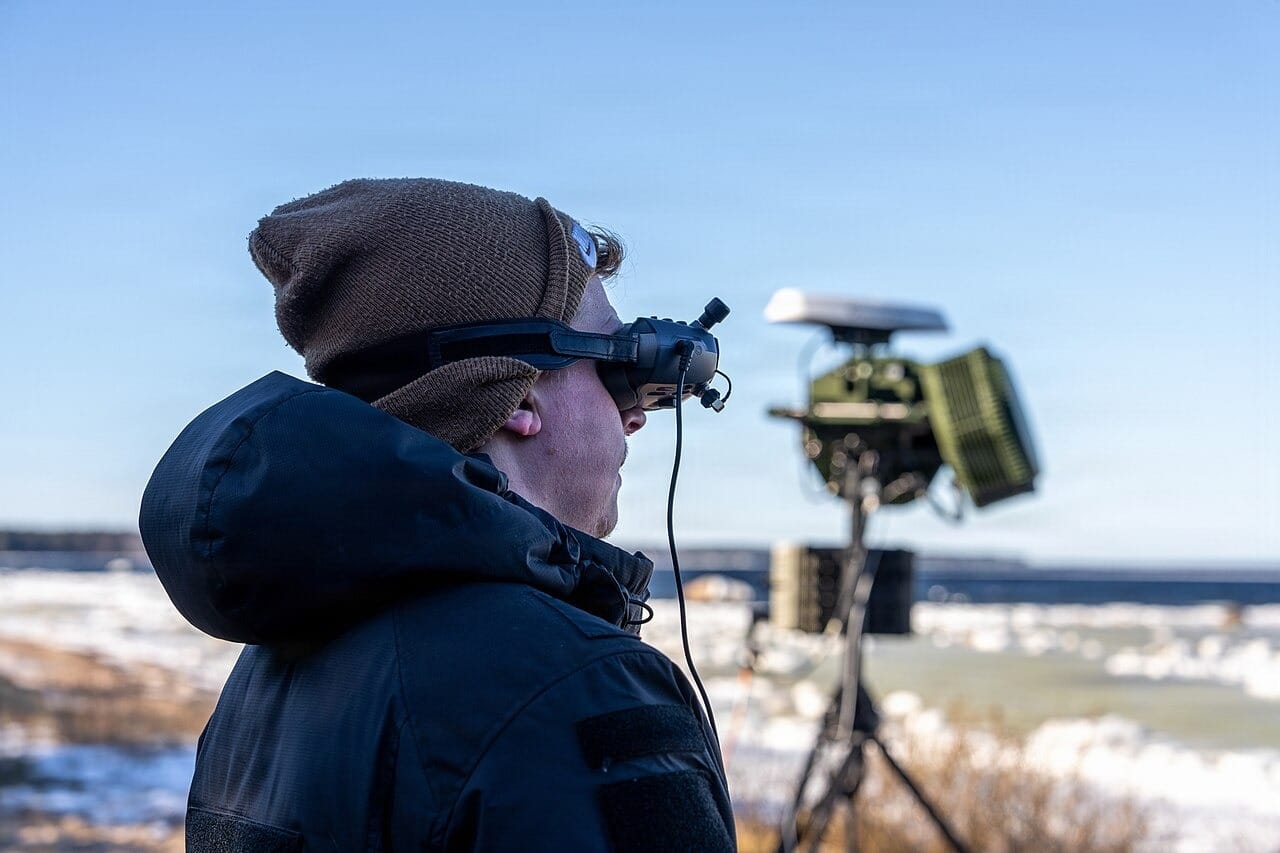

At Rutja, Estonia, on March 5, 2026, counter-drone sensors sent their observations into a shared network. Command centers passed the information onward to units operating CV90 and Piorun weapon systems.
That connection was central to Digital Shield 2.0. U.S., Estonian and other allied forces were testing whether separate sensors, command software and weapons could work as a coordinated defense.
The Estonian Defence Forces described trials of centralized software for controlling interceptor drones and missiles, alongside equipment from domestic and international suppliers. All three Baltic states participated in information sharing. The goal was to make incoming counter-drone systems usable under common control.
The U.S. Army’s account added another requirement: the network had to remain useful under simulated cyber disruption and operational pressure.
Communications teams built and maintained the connections. Drone teams and scouts presented hostile aerial targets. Air-defense teams tested the responses. Each part depended on the others, giving the exercise a broader purpose than demonstrating a single radar or interceptor.
Capt. Micah Maule of the 10th Army Air and Missile Defense Command described the work as fitting experimental sensors and counter-drone weapons into a scalable commercial cloud architecture. He said successive Digital Shield events followed a 90-day cycle, giving participants a route to change equipment and procedures between tests.
Many of the systems were commercial products adapted for military use. The Army linked that approach to the need for affordable responses to large numbers of inexpensive drones.
The official reports did not publish engagement-by-engagement results or measured network delays. They did establish what the participants put under test: the path from a sensor’s detection to a coordinated response, including the people and communications that make it possible.
For allied procurement, that path is part of the capability being bought. A new device earns its place in the defense when the force can use its information and act on it under pressure.
Sources
- The Estonian Defence Forces practiced repelling unmanned aerial vehicles in Rutja together with Allied forces — Estonian Defence Forces · 2026-03-06.
- US, Estonian forces strengthen counter-drone capabilities at Digital Shield 2026 — U.S. Army · 2026-03-07.