
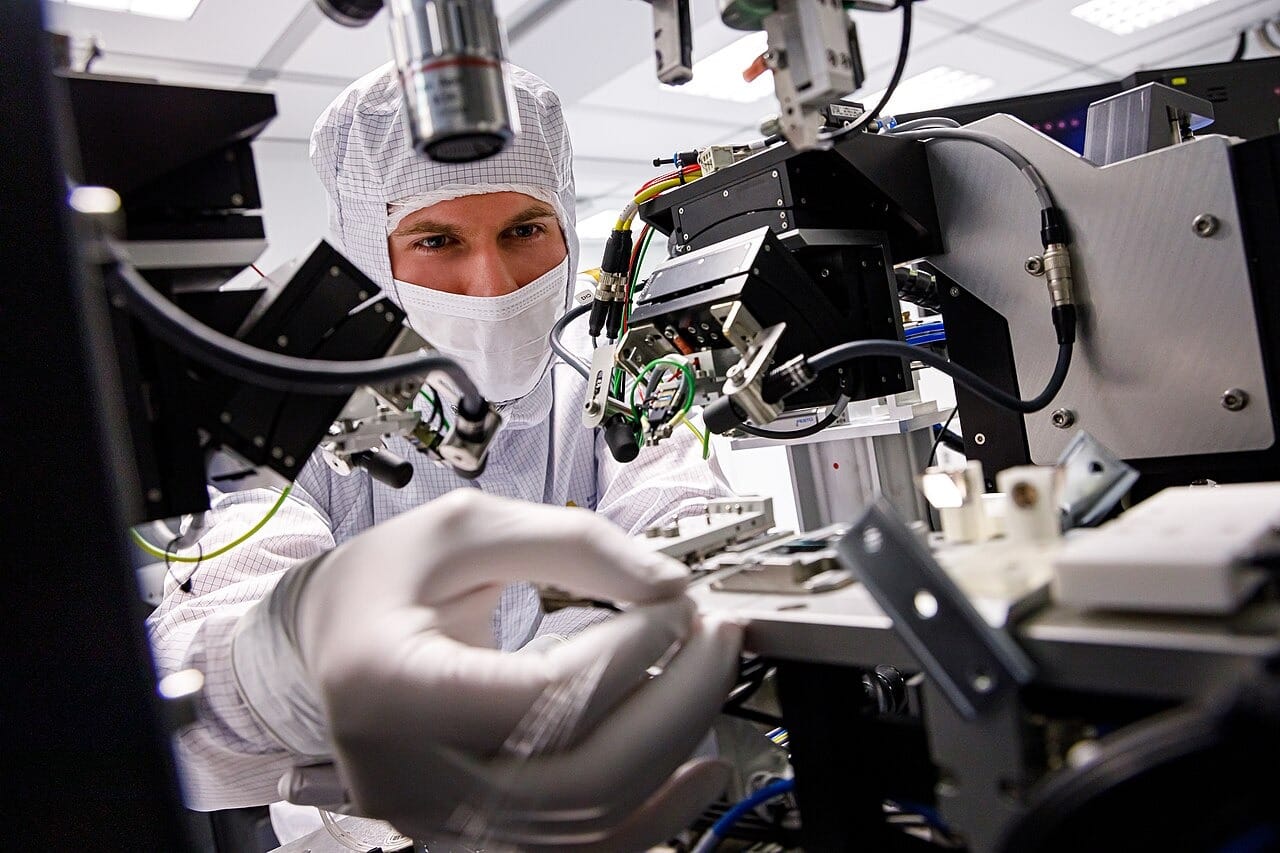

Bosch secured an agreement for up to $225 million in federal CHIPS funding on July 13 for its $2 billion conversion of a semiconductor plant in Roseville, California. The company said sample production was underway, with commercial production expected later in 2026.
The project would give Bosch its first U.S. semiconductor manufacturing facility. It is a conversion of an established plant rather than a factory starting from an empty site: Bosch announced the acquisition in April 2023 and completed it that August.
The company is adapting the site to make silicon-carbide chips on 200-millimeter wafers. Silicon carbide is useful in power electronics because it can operate at high voltages and temperatures and switch electricity rapidly. In an electric vehicle, such components help control the power supplied to the motor.
That is a different manufacturing role from making the processors that run a computer. The Roseville investment is aimed at devices that handle and convert electrical power.
Retaining the people through the conversion
Bosch said it retained all of the plant’s associates during the transformation and trained them with support from its wider manufacturing network. The detail is consequential: reusing a semiconductor site involves transferring process knowledge as well as rebuilding cleanrooms and installing production equipment.
The company described the roughly 40-year-old facility as the foundation for the new operation. Keeping its workforce gave the project continuity in operating a chip plant while employees learned the requirements of a different material and process.
The federal agreement supports that conversion, but its “up to” amount is a funding ceiling. Nor does sample production alone establish sustained commercial output. At the July announcement, the relevant next step was moving the line from producing samples to regular commercial manufacturing.
Roseville’s contribution to domestic supply would be made on that production line, through repeatable processing and qualified output, as much as through the renovated building.
Sources
- Department of Commerce Announces Direct Funding Agreement with Bosch for a $225 Million CHIPS Program Award — U.S. Department of Commerce / NIST · 2026-07-13.
- Bosch announces $225 million direct funding agreement with the U.S. Department of Commerce — Bosch via GlobeNewswire · 2026-07-13.